Event Recap: The Inaugural CLaSH Annual Meeting in Boulder, CO
by Alex Quizon
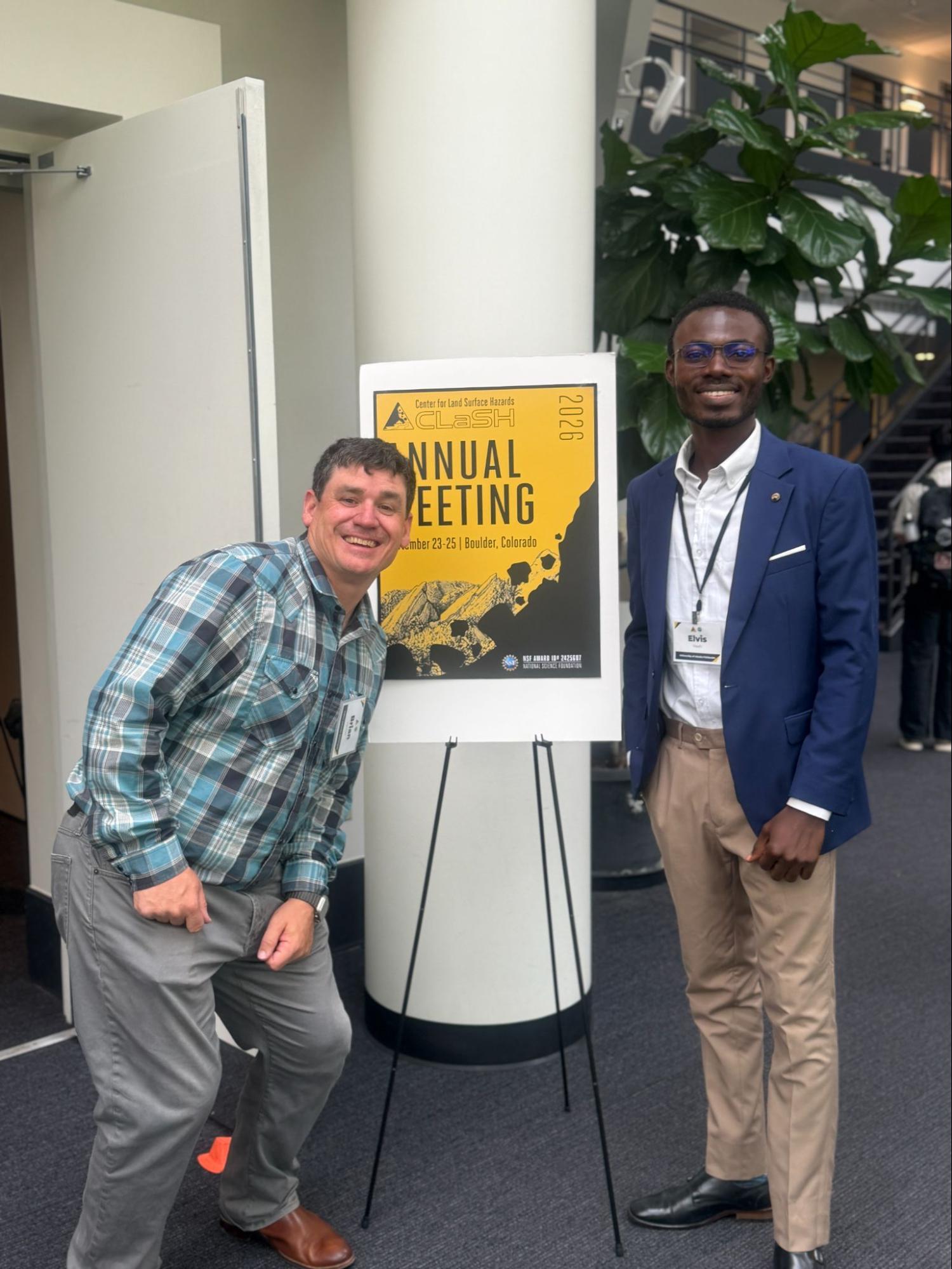
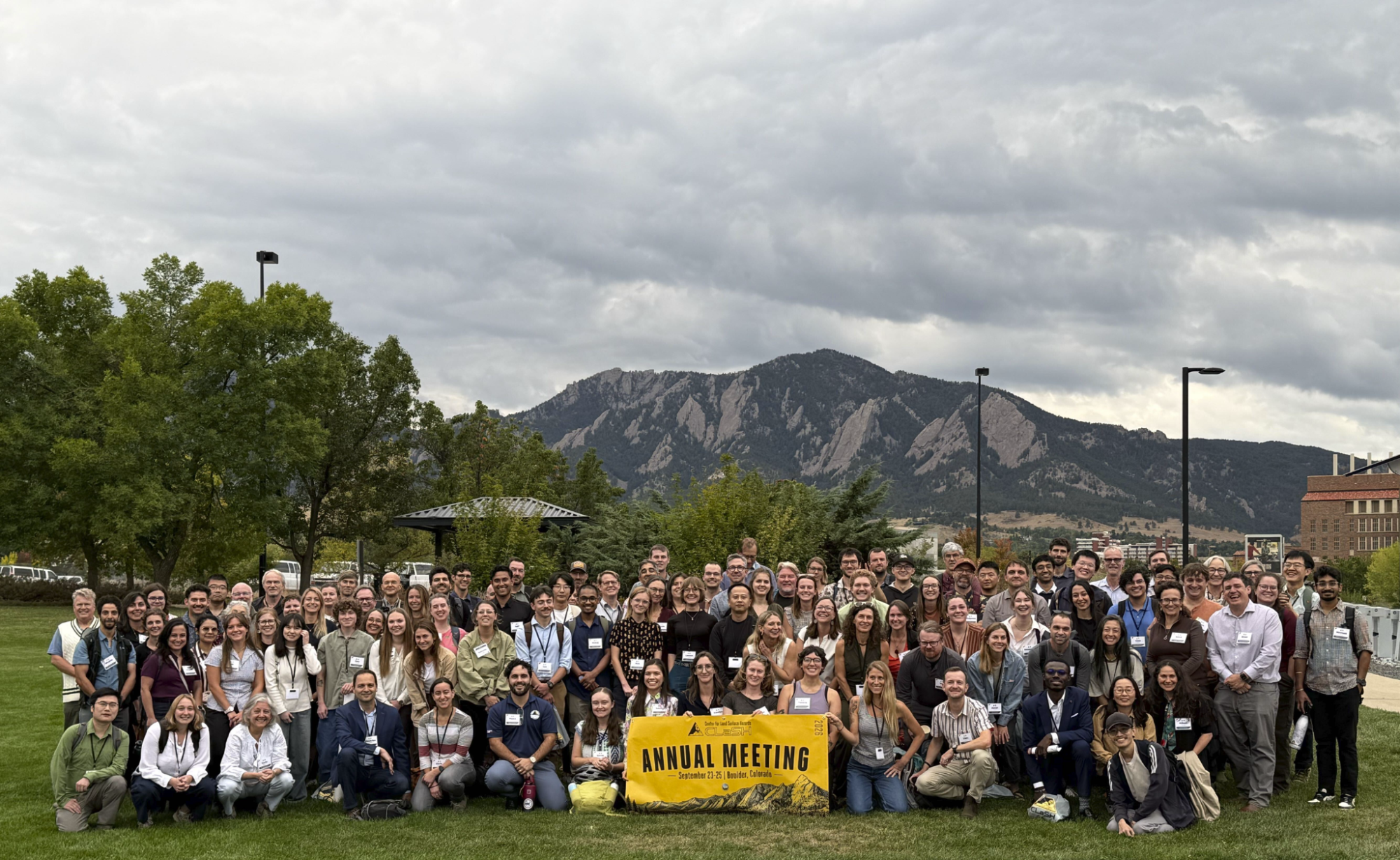
Lead conference organizer Brian Yanites and graduate student Elvis Naah in front of the CLaSH Annual Meeting poster (left). CLaSH annual meeting attendees, posing in front of the Rocky Mountain foothills (right).
Recent years have seen vulnerable communities impacted by various types of land surface hazards, including landslides, debris flows, river erosion, and flash floods. To assist with hazard assessment, mitigation, and response efforts, the Center for Land Surface Hazards (CLaSH) was formally funded in October 2025 with the mission of advancing our understanding of land surface hazards and changing how people understand and prepare for disasters. CLaSH aims to improve our understanding and forecasting of these hazards by supporting a team of scientists from different disciplines who study how hazards start and spread, focusing particularly on how different natural events work together to make disasters more severe and longer lasting.
Following a productive foundational year, community members, institutional partners, and researchers from all over the United States and beyond gathered in Boulder, Colorado for the inaugural CLaSH Annual Meeting! This three-day gathering offered a platform to share early scientific findings, report on operational progress, and strengthen interdisciplinary connections across the land surface hazard community.
Here’s a recap of highlights from the CLaSH annual meeting.
Pre-meeting Collaboration & Technical Workshops
The meeting kicked off on Wednesday, September 23, with the Partners and OpenTopography workshops. These CLaSH-sponsored workshops were designed to foster external collaboration and deliver practical technical training to early-career researchers.
The Partners Workshop, led by CLaSH’s Josh Roering and USGS’ Corina Cerovski-Darriau, centered on aligning scientific research with practical hazard management needs. Specifically, the goals of this workshop included exploring and assessing organizational connections and collaborations; illustrating partner collaboration roles for consequential events; and identifying current gaps in the field of cascading surface hazards for potential CLaSH contributions.
The Partners Workshop keynote was delivered by Katherine Rowden, the program manager of the Silver Jackets interagency working group. Following the keynote address, panel presentations and discussions were used to launch active working sessions during which attendees discussed opportunities and gaps in post-fire, post-storm, and post-earthquake hazard chains.
With 32 attendees, the workshop was an excellent opportunity for research scientists, engineers, emergency managers, government agency coordinators, and many others to discuss the future of risk mitigation related to cascading hazards before the start of the annual meeting.
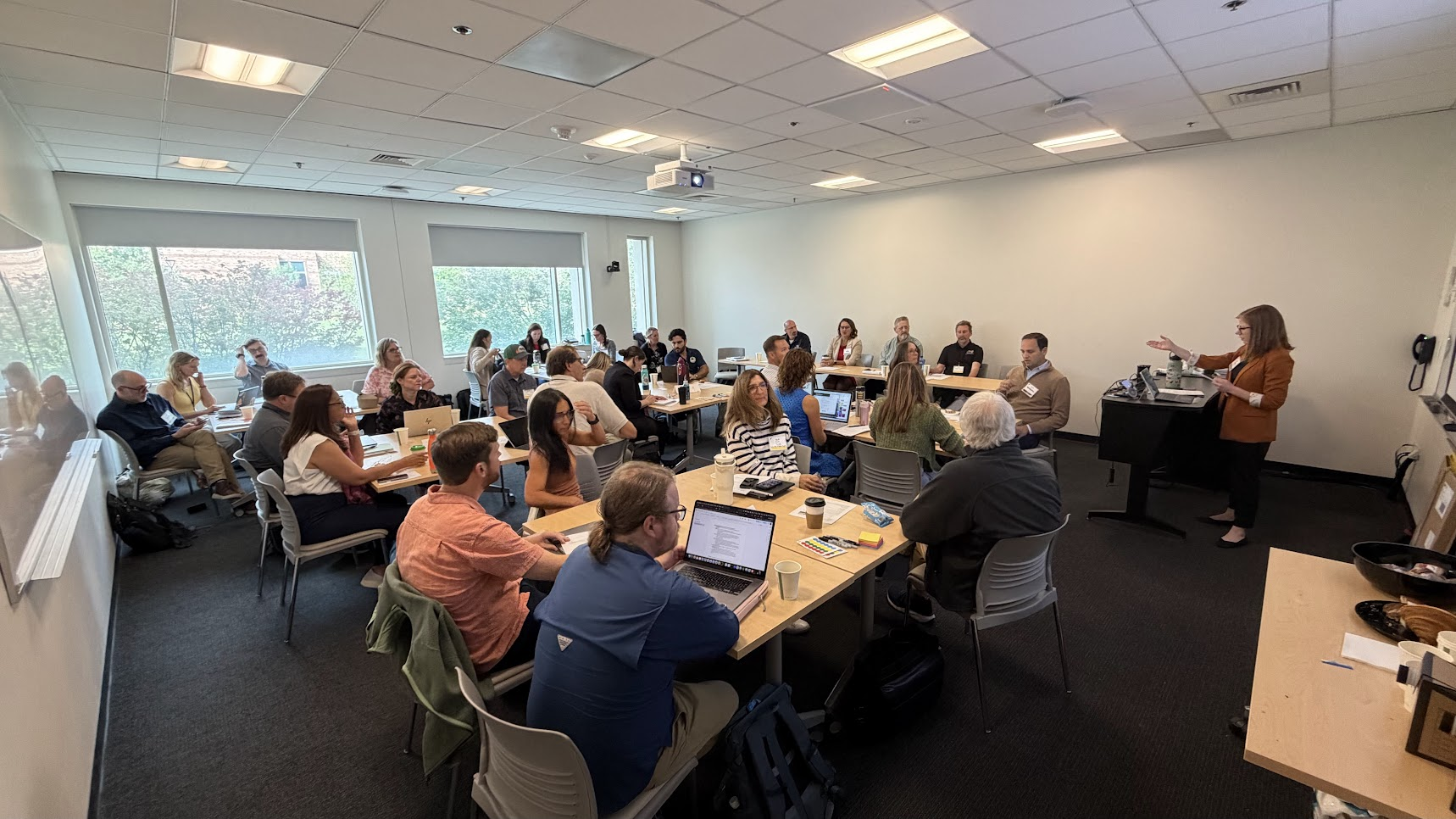
Corina Cerovski-Darriau (USGS) leading the afternoon session of the CLaSH Partners Workshop.
Concurrent with the Partners Workshop, instructors from CLaSH partner OpenTopography (Christopher Crosby, Cassandra Brigham, Chelsea Scott, Matt Beckley) led a technical training session titled “Multi-Temporal Topographic Analysis of Natural Hazards Using OpenTopography.” This workshop introduced OpenTopography: an NSF-supported platform that streamlines the discovery, processing, visualization, and analysis of high-resolution topographic data.
The instructors emphasized that the growing availability of multi-temporal, high-resolution topography datasets from lidar and photogrammetry offers new opportunities to quantify surface change driven by hazard-related processes.
A total of 33 course participants—primarily graduate students and postdoctoral researchers—explored high-resolution topography fundamentals, learned techniques for topographic differencing, and worked through a practical case study examining the 2014 Oso Landslide in Washington.
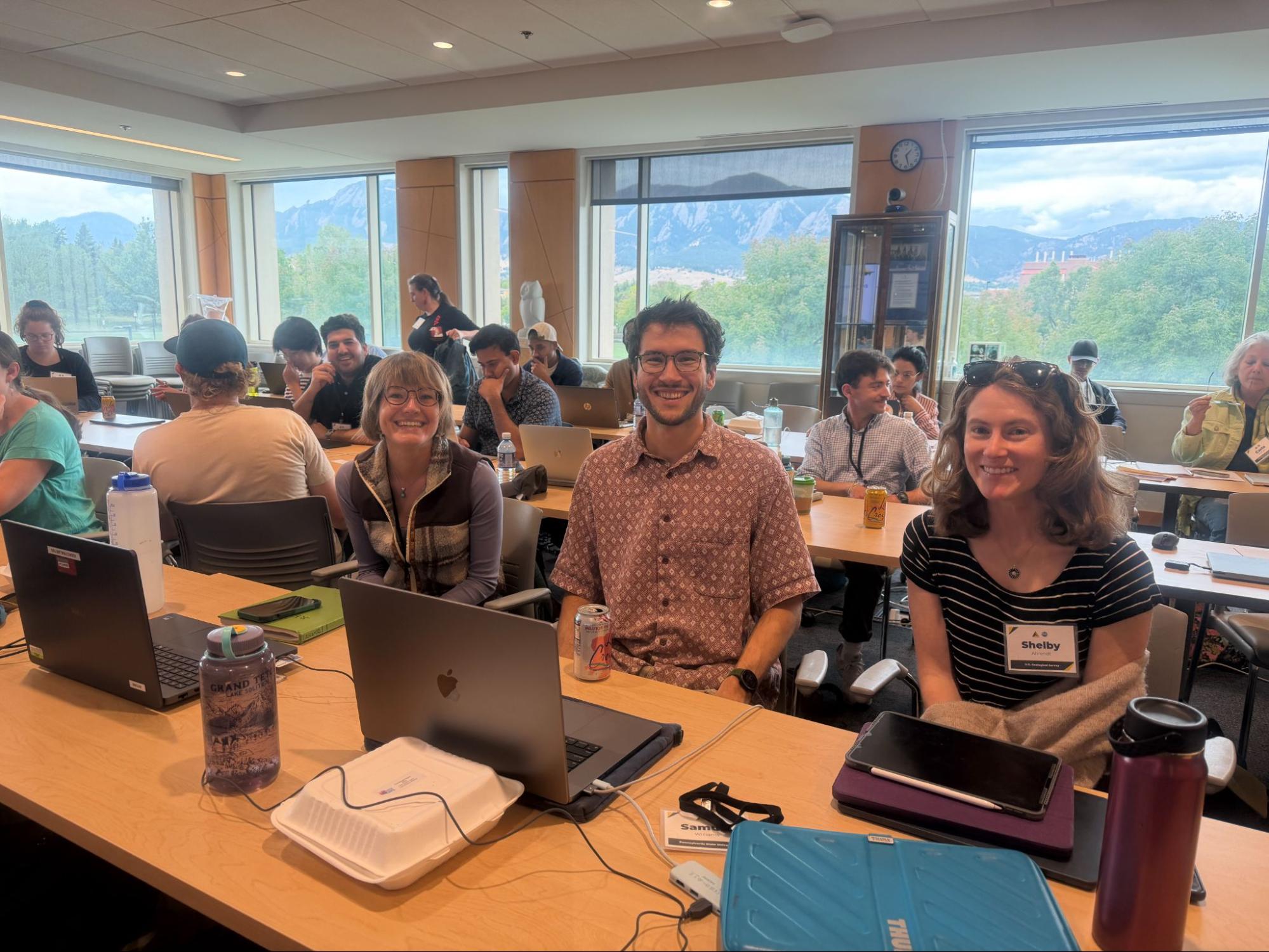
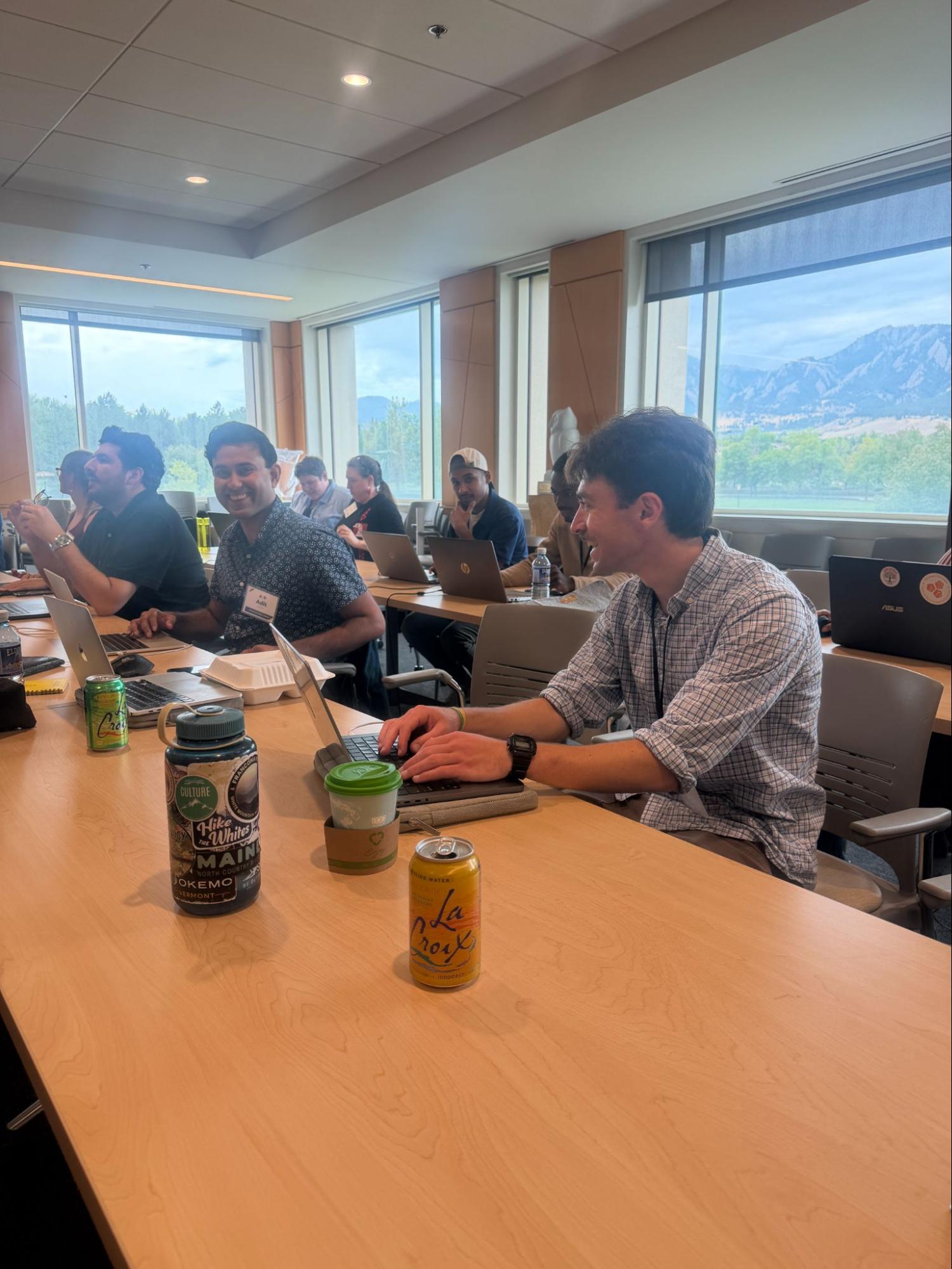
Various OpenTopography workshop participants took advantage of the opportunity to learn current methods during the short course.
Annual Meeting Day 1: Hazard Observatories, Event Response, Research Talks, & Partner Updates
Thursday, September 24, marked the official opening of the annual meeting, beginning with a keynote address by Sara McBride, the Executive Director of the California Seismic Safety Commission. Her presentation emphasized the importance of protective actions, warning systems, and aligned messaging to preserve the safety of populations in landslide-vulnerable regions. McBride highlighted the unique character of landslide hazards and encouraged the community to align risk messaging with our understanding of hazard cascades.
The morning program continued with operational updates on research-focused CLaSH Major Activities (MAs), featuring recaps of MA2, which consists of surface hazard research conducted at CLaSH observatories in Alaska, Southern California, Puerto Rico, and Appalachia, presented by Josh Roering, Professor at the University of Oregon, and MA1, which consists of the Center’s event response research focusing on events like the recent Philippines earthquake and Nepal flooding event, presented by Josh West, Professor at USC.
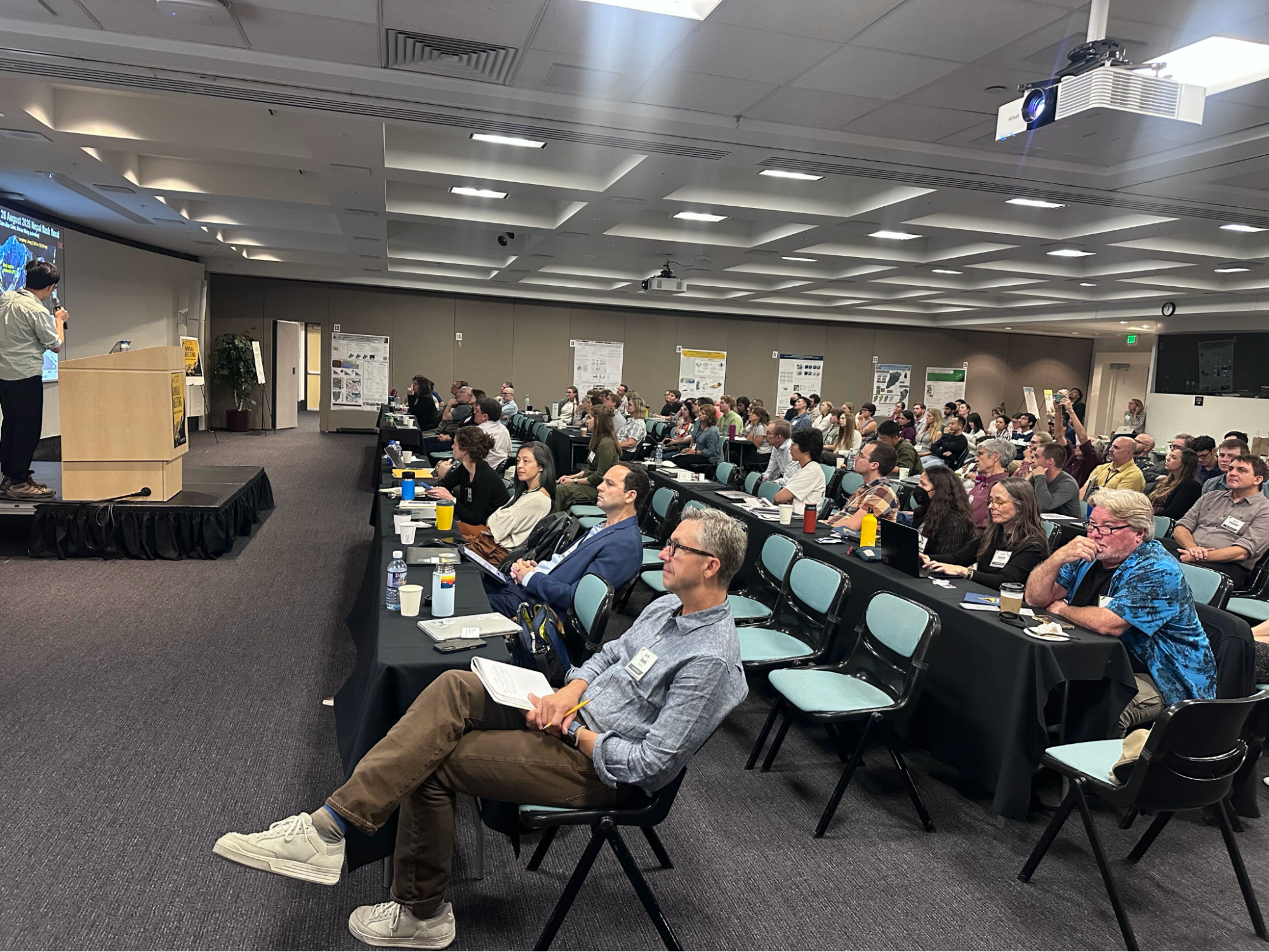
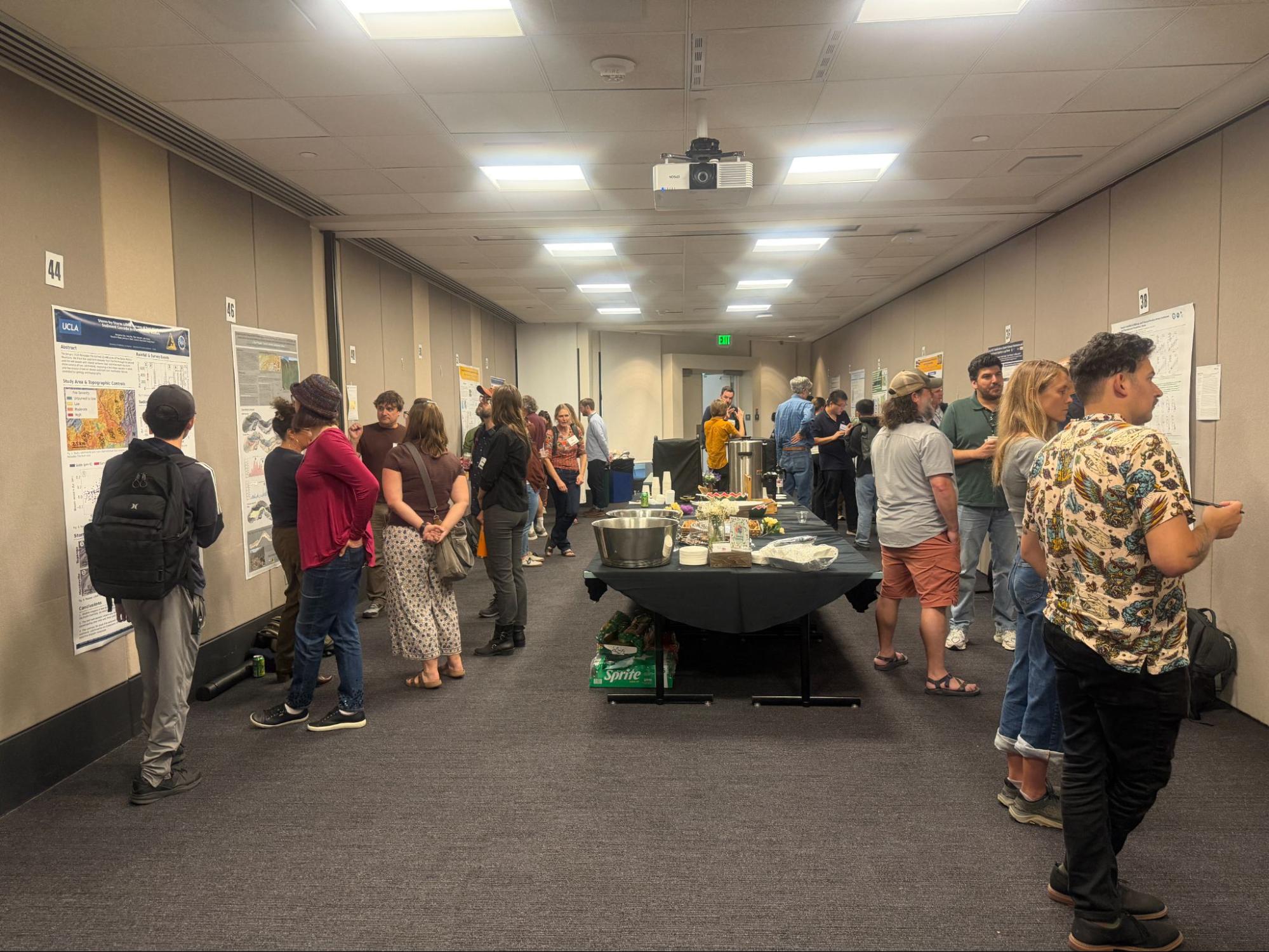
CLaSH annual meeting attendees listened to a lightning talk by graduate student Chan-Mao Chen (left). Attendees engaged in discussions about hazard research at the poster showcase (right).
In addition to operational updates, Thursday featured numerous scientific talks covering a broad range of ongoing research from both CLaSH and partnering researchers. Ann Sinclair, a doctoral student at Northwestern University, presented her recently published, CLaSH-sponsored research showcasing the importance of using physics-based modeling for precipitation estimates to fill in the gaps from observational data. UCLA/ETH Zürich professor Seulgi Moon discussed the role that critical zone preconditioning in the Topanga and Mandeville Canyons played in the magnitude and evolution of cascading hazards after the 2025 Palisades Fire. Moon and her colleagues with the Southern California hazard observatory are continuing their CLaSH-sponsored research on the Palisades Fire.
Invited faculty speakers Noah Finnegan (UCSC) and Allison Pfeiffer (Western Washington) presented on advances in geomorphic modeling. Finnegan synthesized monitoring data from active bedrock landslides in California and Alaska to demonstrate the capabilities of rate-state friction models, while Pfeiffer laid the foundations for a framework to predict the magnitude and timing of large sediment pulses and fluvial responses from alpine stratovolcanoes based on lithology and morphodynamics.
CLaSH also invited several researchers and program directors from the USGS to discuss progress towards hazard monitoring, assessment, and mitigation. These invited speakers included Kate Allstadt, who outlined advances in their global seismic monitoring system (with a focus on coseismic landslides); Katy Barnhart, who described the expanding scope of post-fire debris-flow hazard assessment and the implications for debris-flow runout forecasts; and Jenny Riker, who detailed the efforts of the National Landslide Hazard Reduction Program over the past five years.
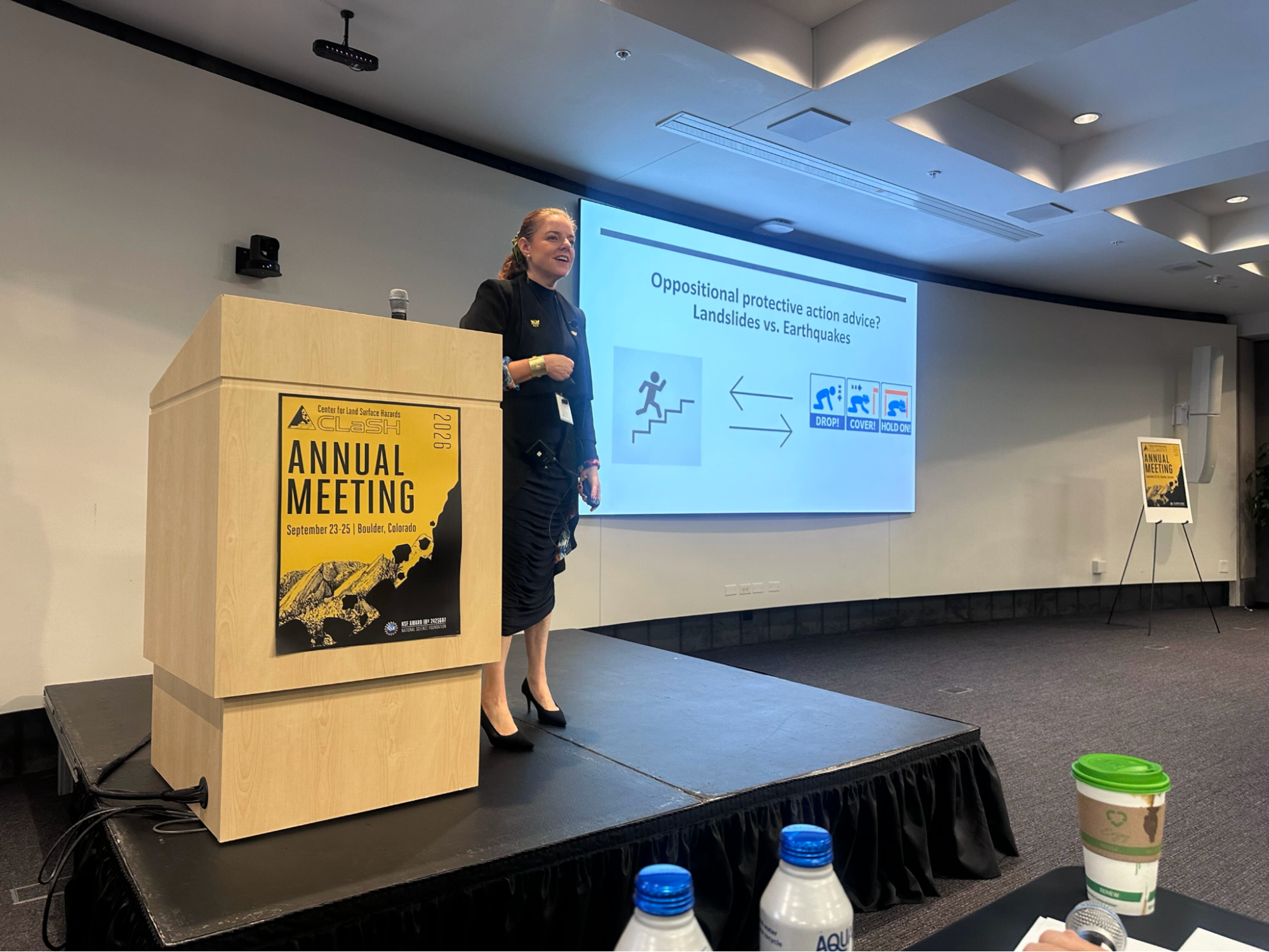
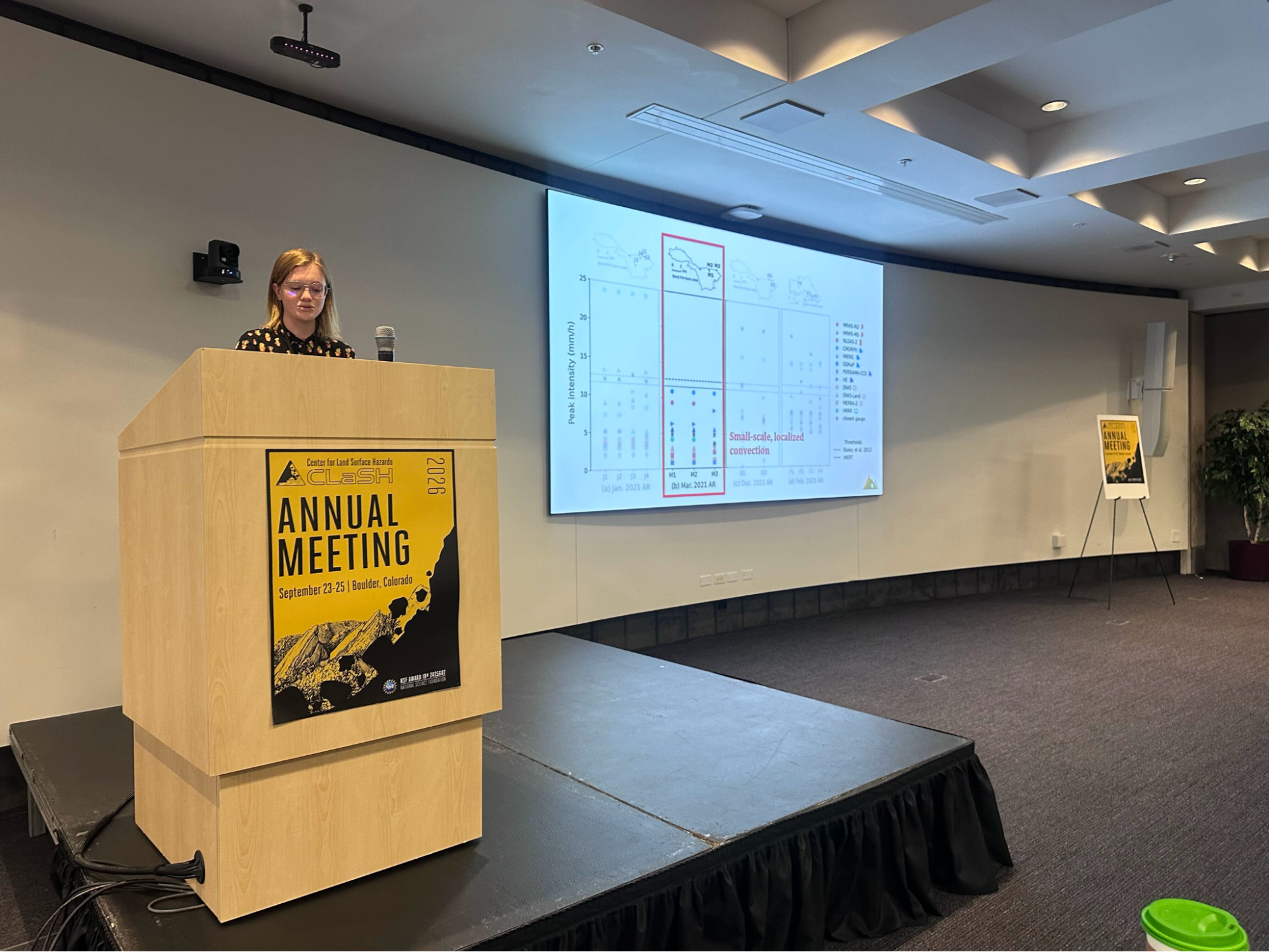
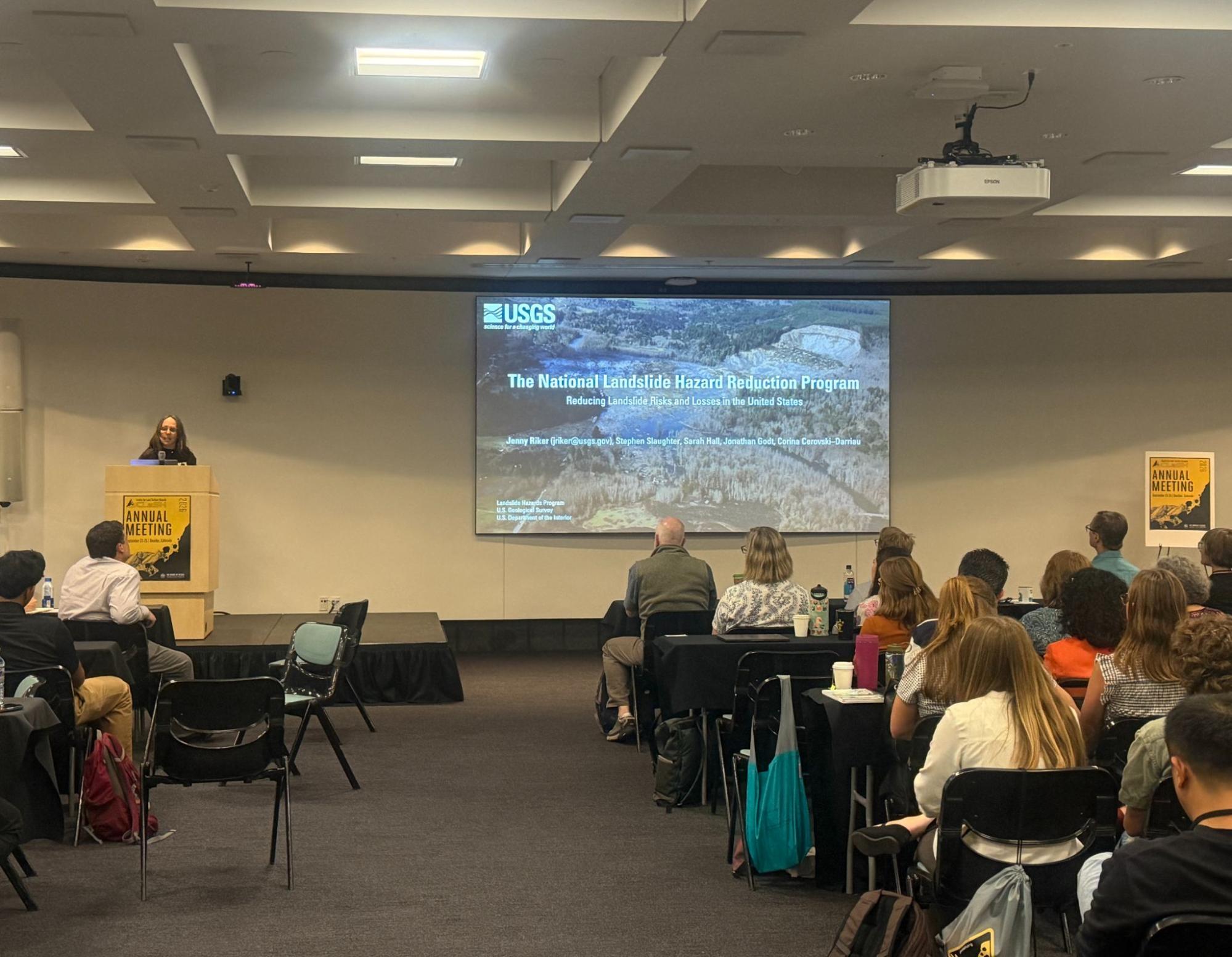
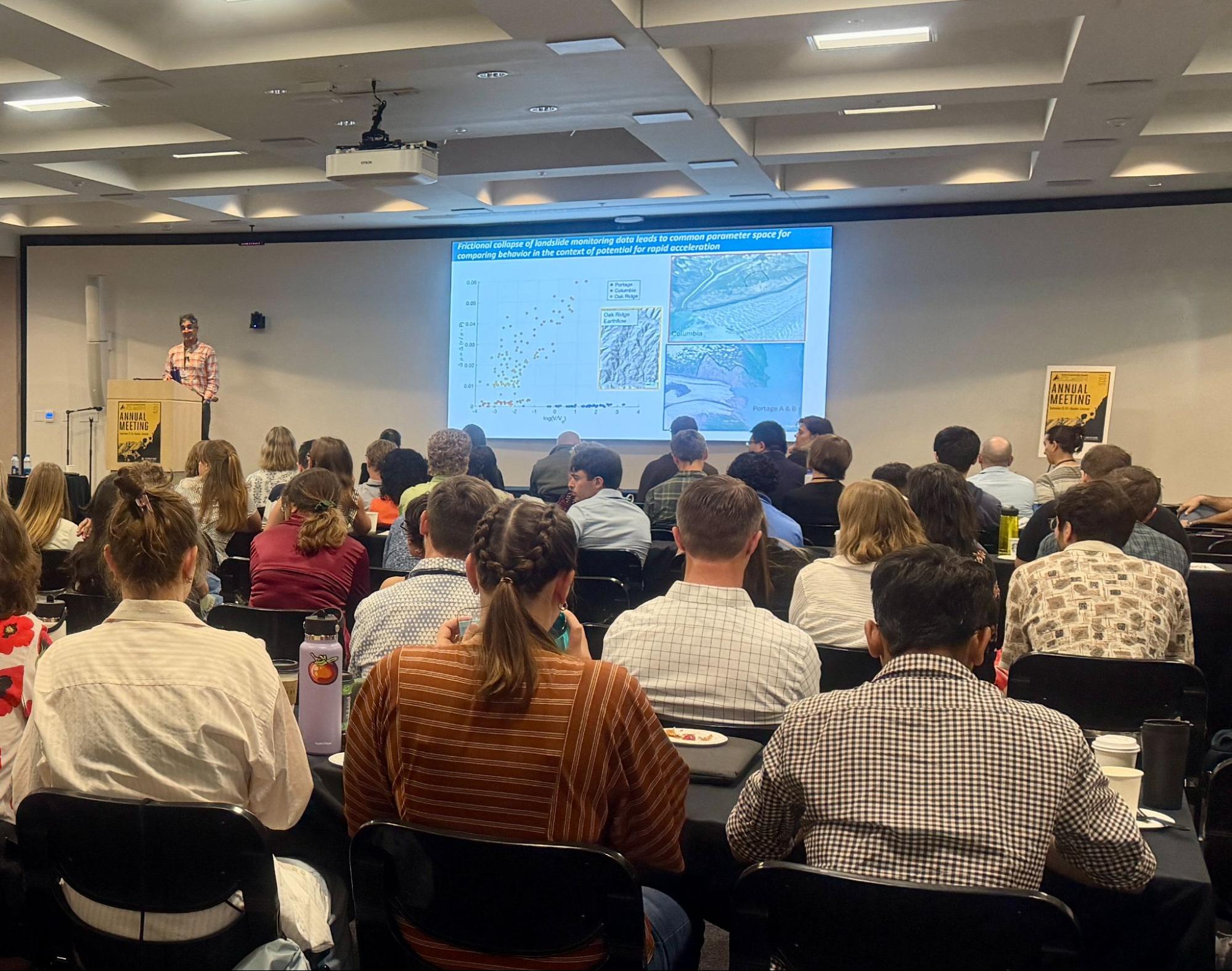
Select invited speakers (with attendees in the background), pictured clockwise from top left: Sara McBride, Ann Sinclair, Noah Finnegan, and Jenny Riker.
Day 1 also included two lightning talk sessions, a dedicated CLaSH student lunch, interactive breakout discussions on new scientific avenues for cascading hazards research, and an afternoon poster session showcase. Attendees concluded the day with a lively banquet at the University of Colorado Boulder’s Koenig Alumni Center, which allowed everyone to relax after the first day of events.
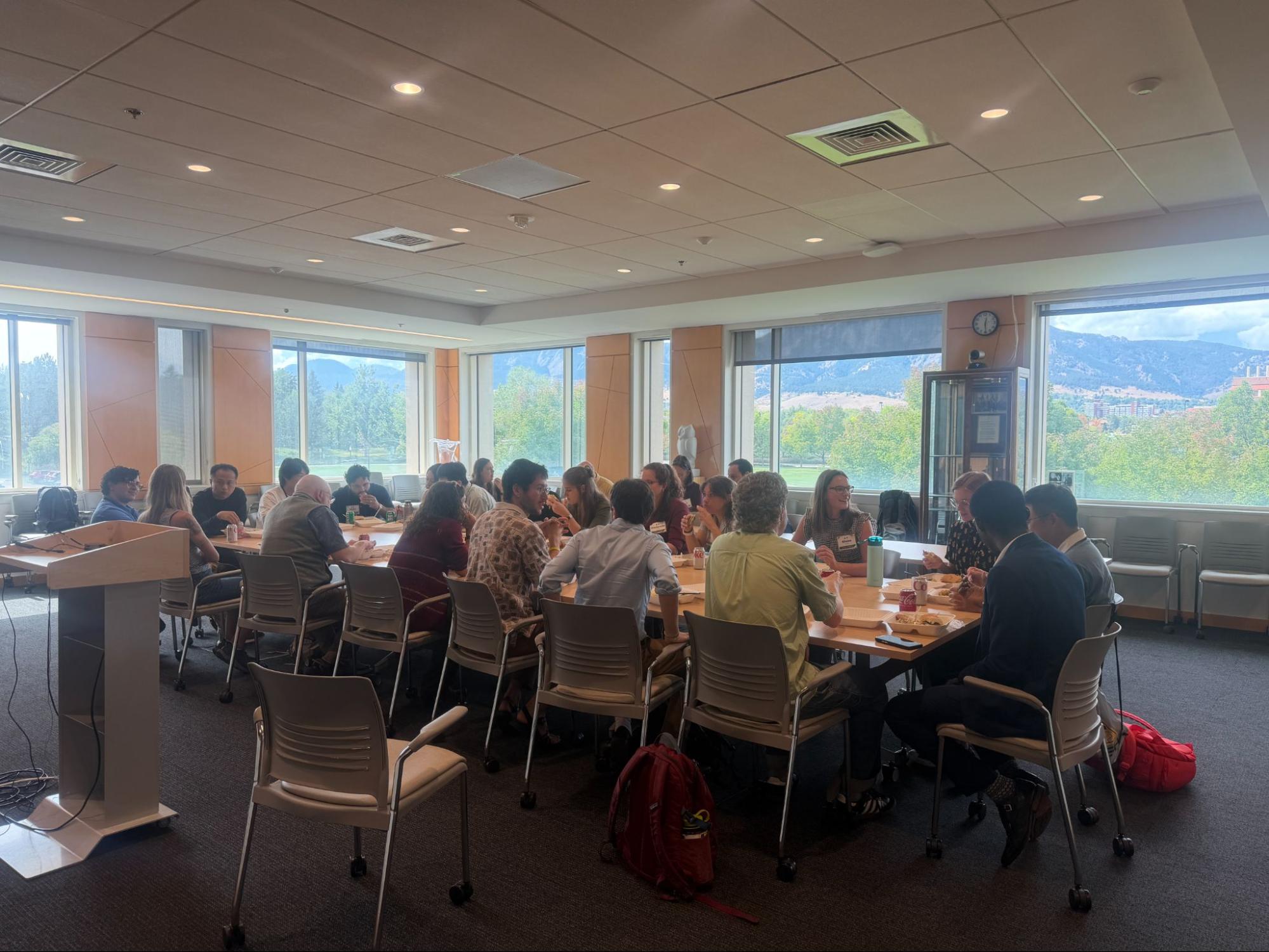
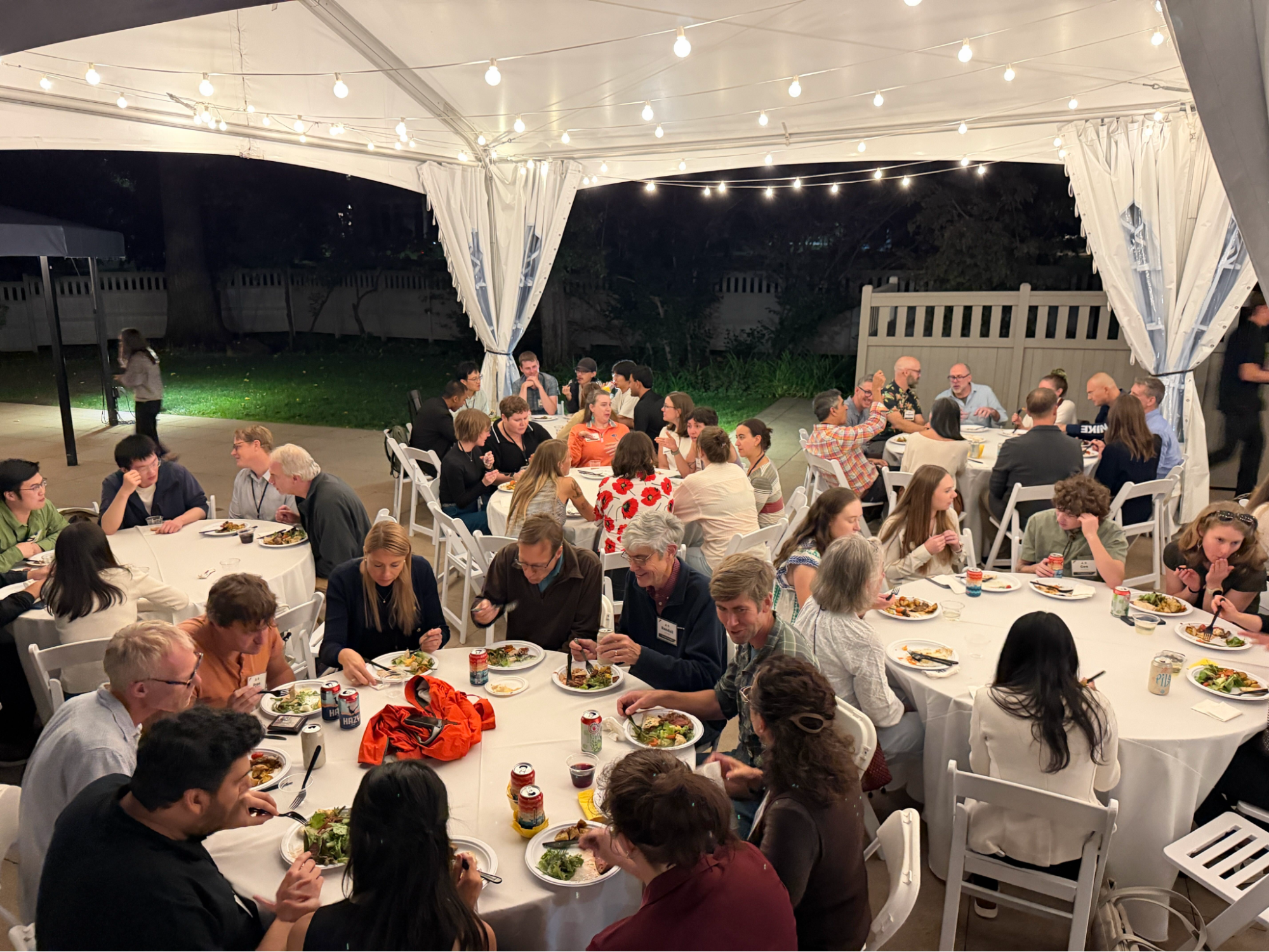
CLaSH students and members of the MA5 education & workforce development team gathered at the student lunch (left). Annual meeting attendees gathered at the Thursday evening dinner & banquet at CU Boulder’s Koenig Alumni Center (right).
Annual Meeting Day 2: Center-Wide Integration, Interdisciplinary Research Talks, & Partner Collaborations
Friday’s Day 2 agenda focused on center-wide integration, education, and strategic partnership opportunities. Program updates covered five CLaSH Major Activities, including MA2 (Hazard Observatories), MA3 (Emergent Grant Opportunities), MA4 (Modeling Collaboratory), MA5 (Education & Workforce Development), and MA6 (Community Engagement). Updates were presented by Major Activity leaders Josh West and Dan Horton (Northwestern), Eric Kirby (Penn State) and Megan Plenge (UNC Chapel Hill), Josh Roering (Oregon), and Dimitrios Zekkos (UC Berkeley).
Field instructor Ben Mason (Nevada-Reno) and six students from the 2026 summer field school enthusiastically took the stage to present outcomes and memorable experiences from their field training. This course consisted of one intensive week of learning state-of-the-art approaches for field observation (e.g., UAS surveys, lidar, Structure from Motion), data acquisition, and analysis to investigate the impacts of the 2020 Cameron Peak Fire in Colorado.
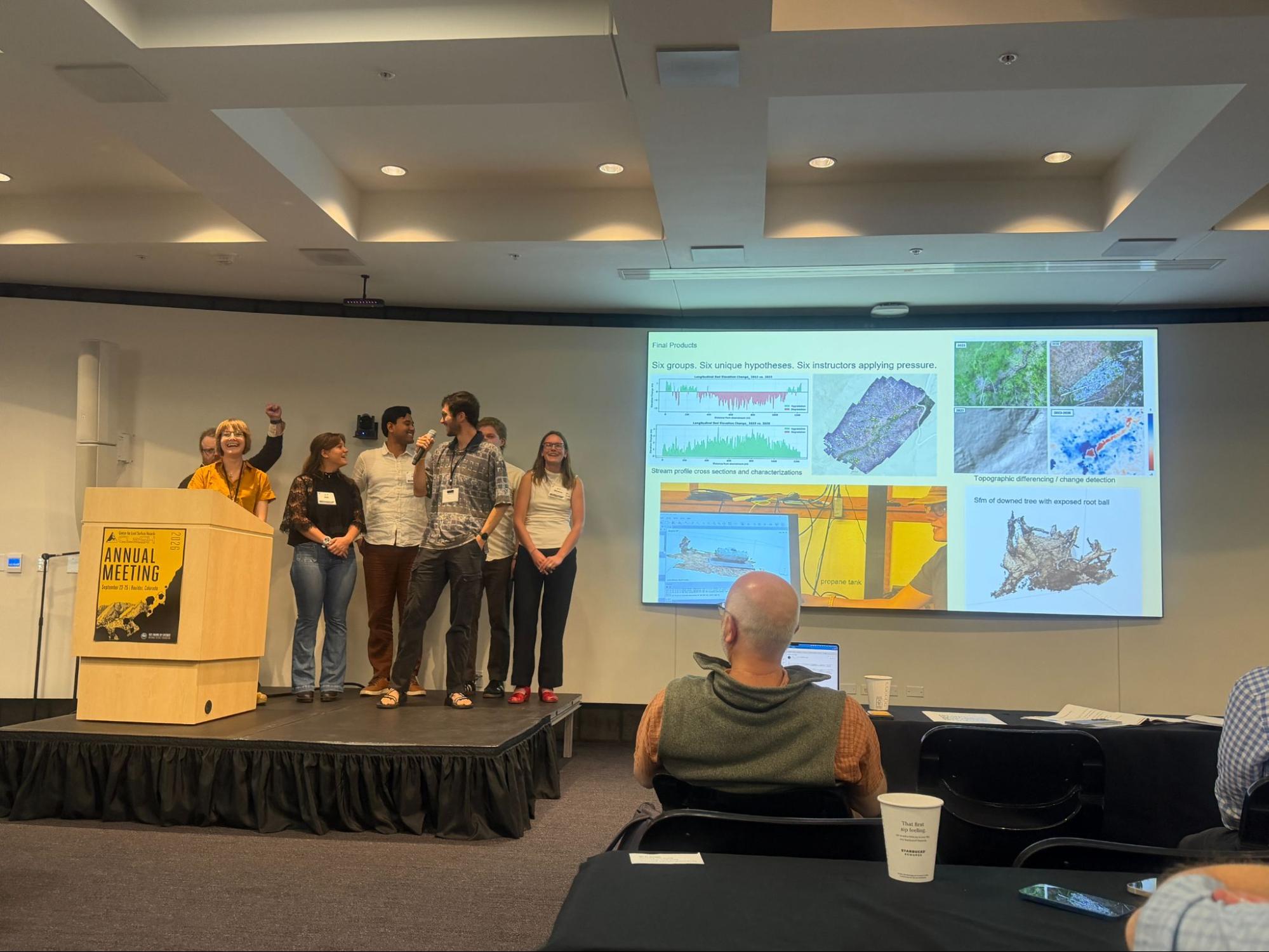
Six graduate students (Lauren Guido, MK Siar, Adit Ghosh, Sam Williams, Ries Plescher, Sirena Motter) presenting their experience and discoveries from the 2026 summer field course.
Partner organization talks highlighted interdisciplinary frameworks, underscoring the importance of integrating hazard research with the spheres of education and the broader social sciences. Karen Kortz (Community College of Rhode Island) discussed educational pathways and thoughtful engagement with two-year colleges. Lori Peek (CU Boulder) presented on the framework of “participatory convergence” and identified collaborative opportunities between CLaSH and related disaster research networks.
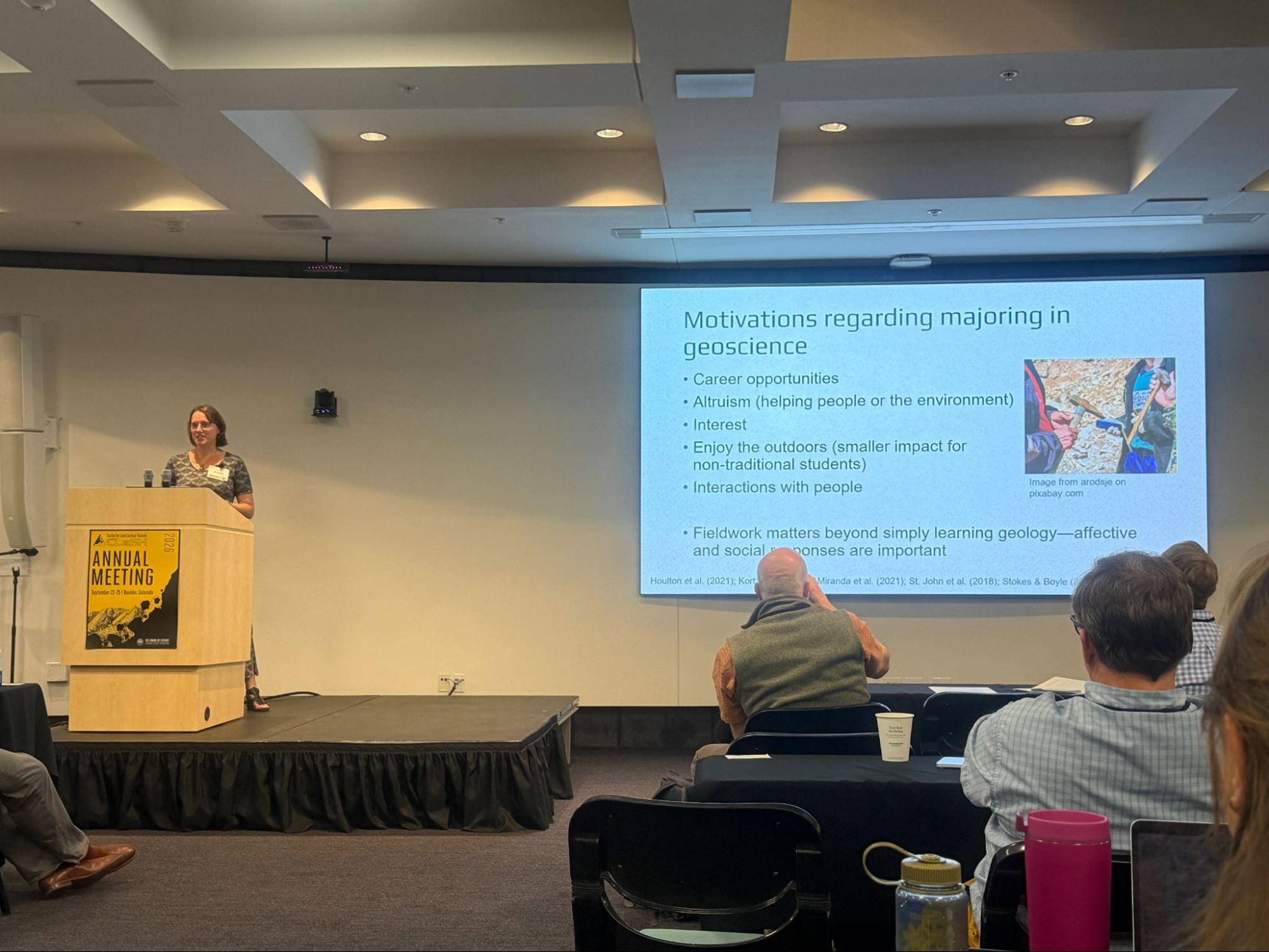
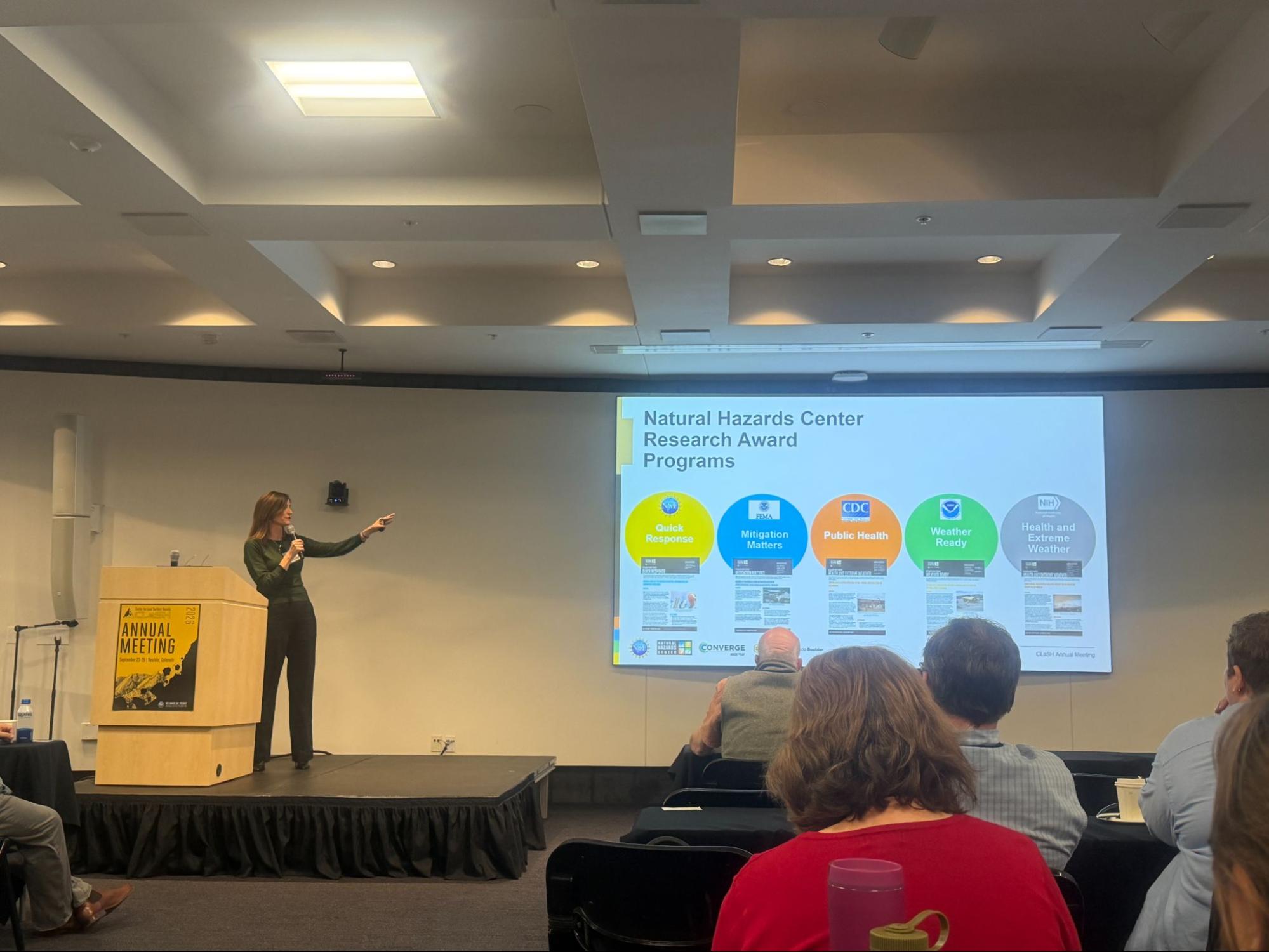
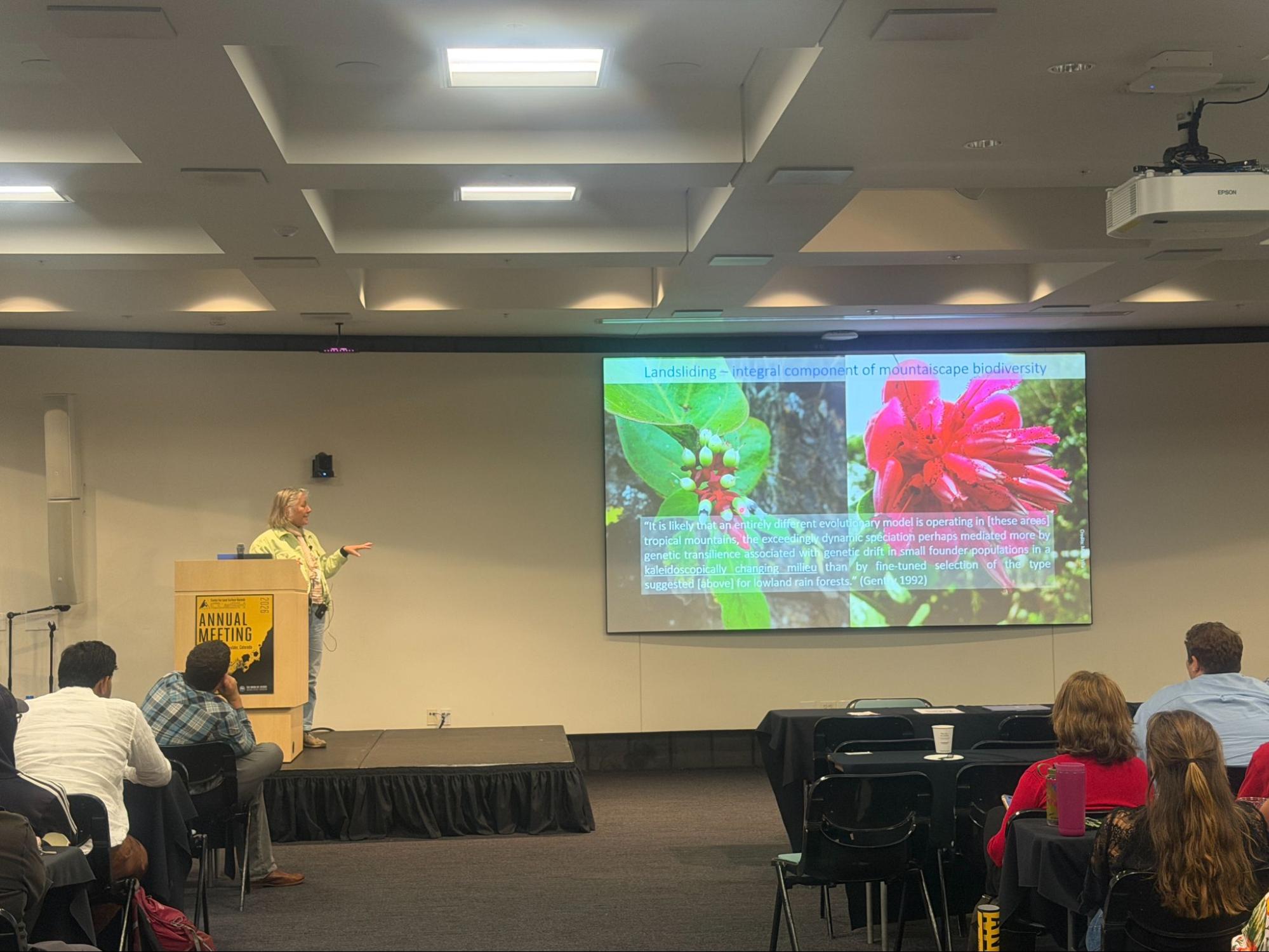
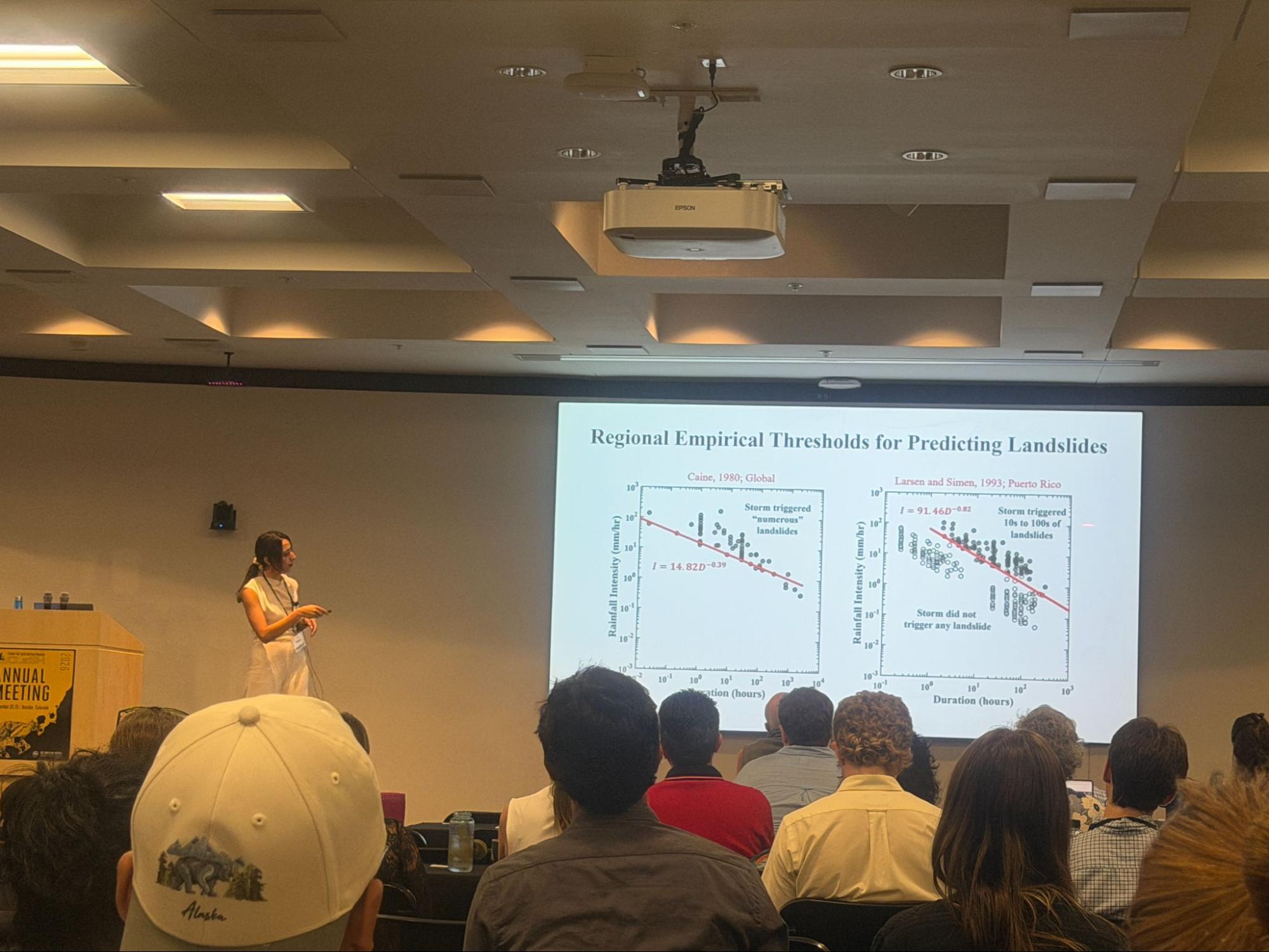
Select invited speakers (with attendees in the background), pictured clockwise from top left: Karen Kortz, Lori Peek, Mirna Kassem, and Carla Restrepo.
In the afternoon, scientific presentations continued with CLaSH and partner researchers. Presentations on CLaSH-sponsored research included a talk by Mirna Kassem, a UC Berkeley postdoctoral researcher, who explored regional mechanistic modeling of rainfall-induced landslide triggering in Puerto Rico. UPR Río Piedras professor Carla Restrepo examined the relationship between microbial-plant interactions and biological rock weathering in landslide-prone mountainscapes.
Invited faculty speaker and small grants recipient Erkan Istanbulluoglu (University of Washington) demonstrated the power of integrating NASA products, earth surface dynamics (ESD) models, and ensemble simulations via artificial intelligence for the development of comprehensive predictive cascading hazard chain models. Invited SZ4D speaker Brandon Schmandt (Rice University) updated the community on their multi-hazard instrumental network concept generated by SZ4D community input, regional stakeholders, and research project participants.
In addition to these talks, Day 2 included two lightning talk sessions, interactive breakout discussions on CLaSH engagement with the wider hazard research community, and a final afternoon poster session showcase.
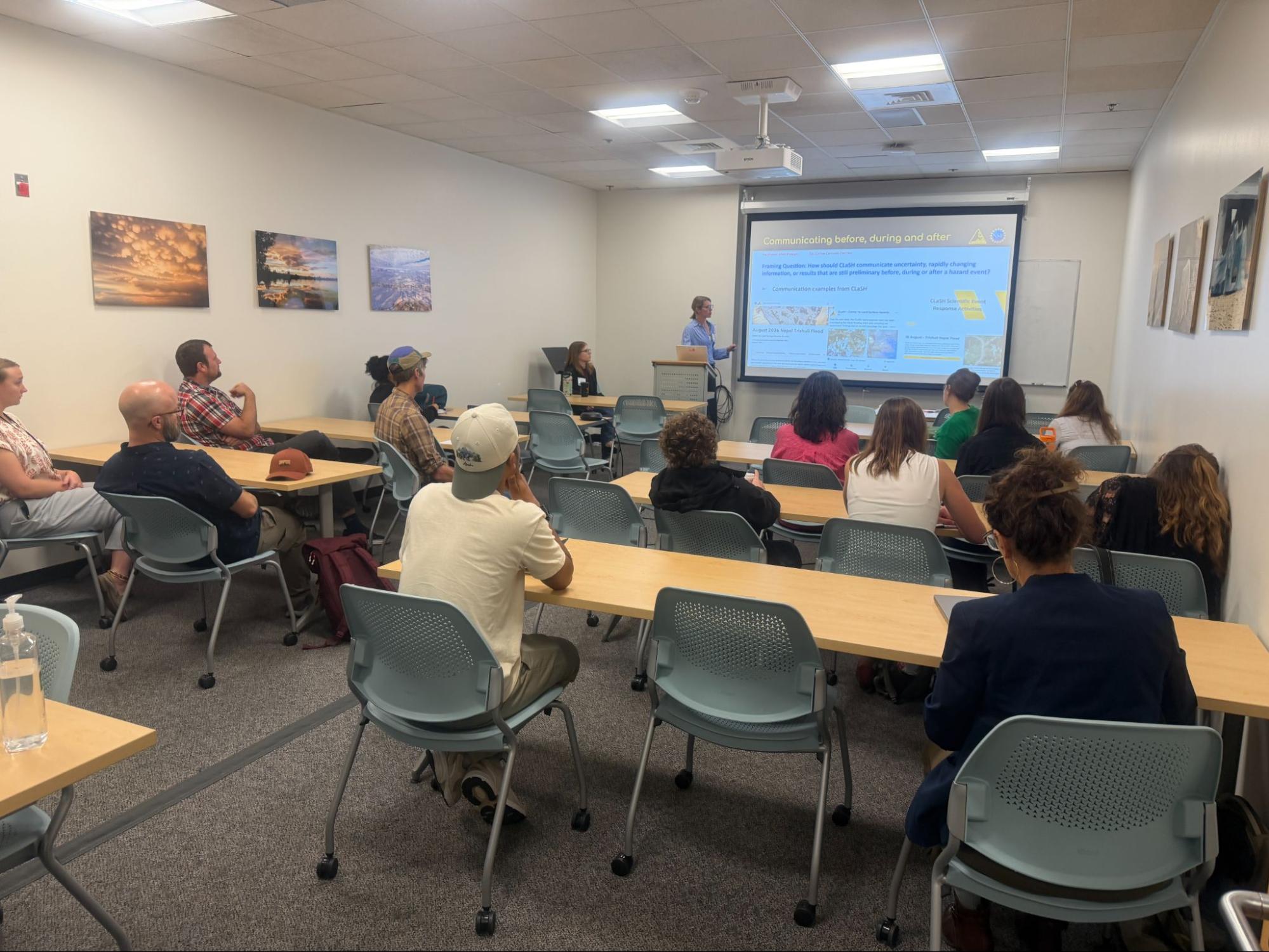
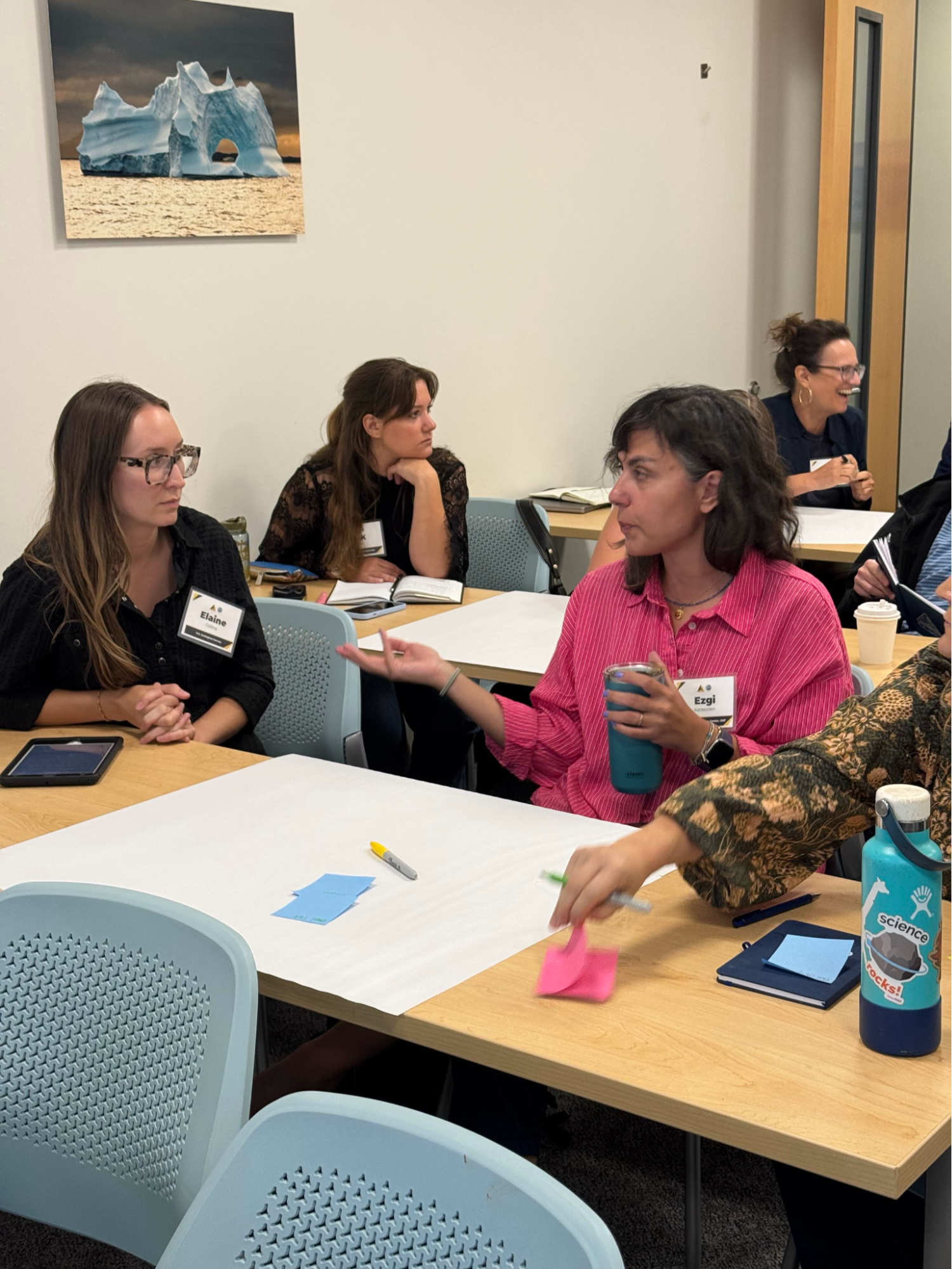
Breakout session participants brainstorming opportunities for future CLaSH activities and collaborations with partnering institutions.
Moving Forward with Hazard Science
CLaSH is grateful to everyone who contributed to our inaugural annual meeting in Boulder! The Center welcomed 149 attendees, including 34 graduate students, 15 postdoctoral fellows, and 28 early-career researchers. Our program included 15 lightning talks, 13 full-length talks, and 54 poster presentations—and an immeasurable number of valuable conversations.
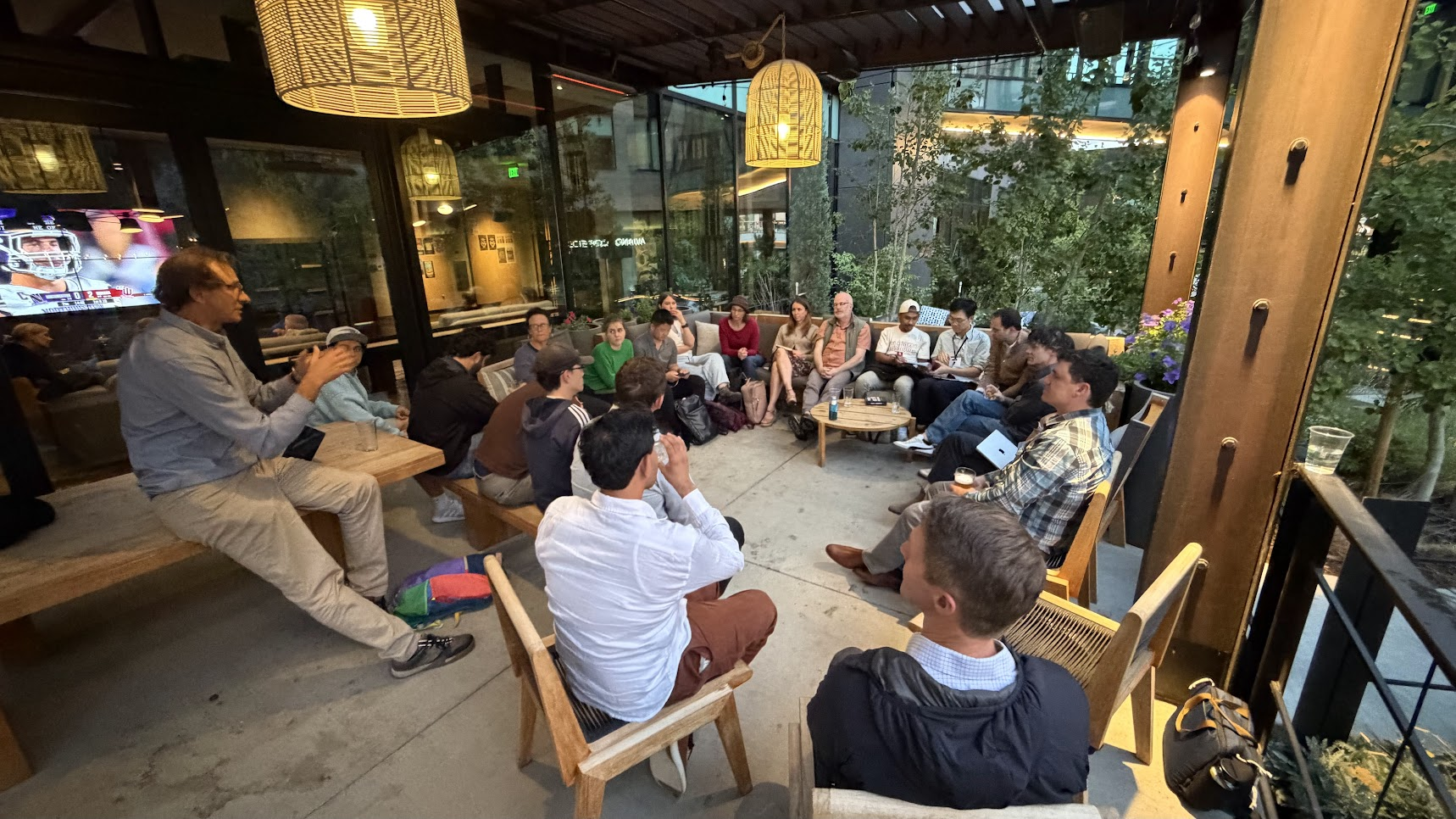
Josh West leads a discussion on CLaSH’s event response to the August 2026 debris flood on the Trishuli River in Nepal.
Plenty of discussion at the meeting centered around the recent flooding in Nepal on August 26, 2026—a tragic event whose exact details are still emerging. On Friday evening, community researchers gathered to discuss future research that builds on the existing efforts led by CLaSH’s MA1 Hazard Event Response team. A summary of these efforts can be found in this ArcGIS StoryMap, and we encourage anyone interested in working or collaborating on these efforts to reach out. There will also be opportunities to discuss the Nepal flooding at the late-breaking session, “2026 Nepal Debris Avalanche and Flash Flood,” at the 2026 AGU annual meeting in San Francisco.
Overall, participants agreed that it was fruitful to assemble so many people in the hazard space at the same time: “What was most exciting to me as a PI and meeting organizer was seeing the meeting become more than a venue for people to present their individual work,” said Brian Yanites, lead conference organizer and CLaSH PI. “We brought together researchers, students, practitioners, and agency partners who approach land-surface hazards from very different perspectives, and gave them space to think together about the connections among these hazards and where the biggest opportunities are for the field. That is really what CLaSH is about—building a community that can ask questions and develop collaborations that none of us could tackle as effectively on our own.”
A sincere thank you to all members of the CLaSH community, our invited speakers, and our organizational partners for contributing to a successful inaugural meeting. Your insights, engagement, and collaborative spirit set a strong foundation for the work ahead. We look forward to seeing everyone next year!