The Value of Partner Relationships in Cascading Hazard Research
From the early days of its formation, researchers in the Center for Land Surface Hazards (CLaSH) knew they wanted to build and nurture partnerships with other hazard researchers, emergency practitioners, and public officials.
“Given the proliferation of land surface hazard impacts globally, we became motivated by the need to integrate practitioners into our Center’s activities to help us better understand how to make our science useful and used,” said Josh Roering, professor of earth sciences at the University of Oregon, and co-PI of CLaSH. “We wanted to include opportunities to bring these sectors together with land surface geoscientists to identify gaps and needs and use the center to make progress.”
CLaSH continues to build partnerships across the U.S. and internationally. Hazard practitioners are varied, hailing from sectors like emergency management, public utilities, non-governmental humanitarian organizations, real estate, insurance, and federal and state agencies and governments.
We believe that the best partnerships put research into action. Together with our partners, our center is striving to broaden our impact and help fill in data gaps in cascading hazard science while being helpful to practitioners responding to events on the ground.
Partnerships take research to the next level
Geoscientists, by their nature, love discovery, said Roering. “The process of sorting out how the Earth works through observations, calculations, or experiments is very satisfying and fulfilling to us and is needed to propel us through the work of getting a PhD and building a research program,” he explained. “We often motivate our scientific papers with statements about the societal importance of the work we do, but frankly the vast majority of the research community rarely experiences the opportunity to translate their understanding for application to societal needs.”
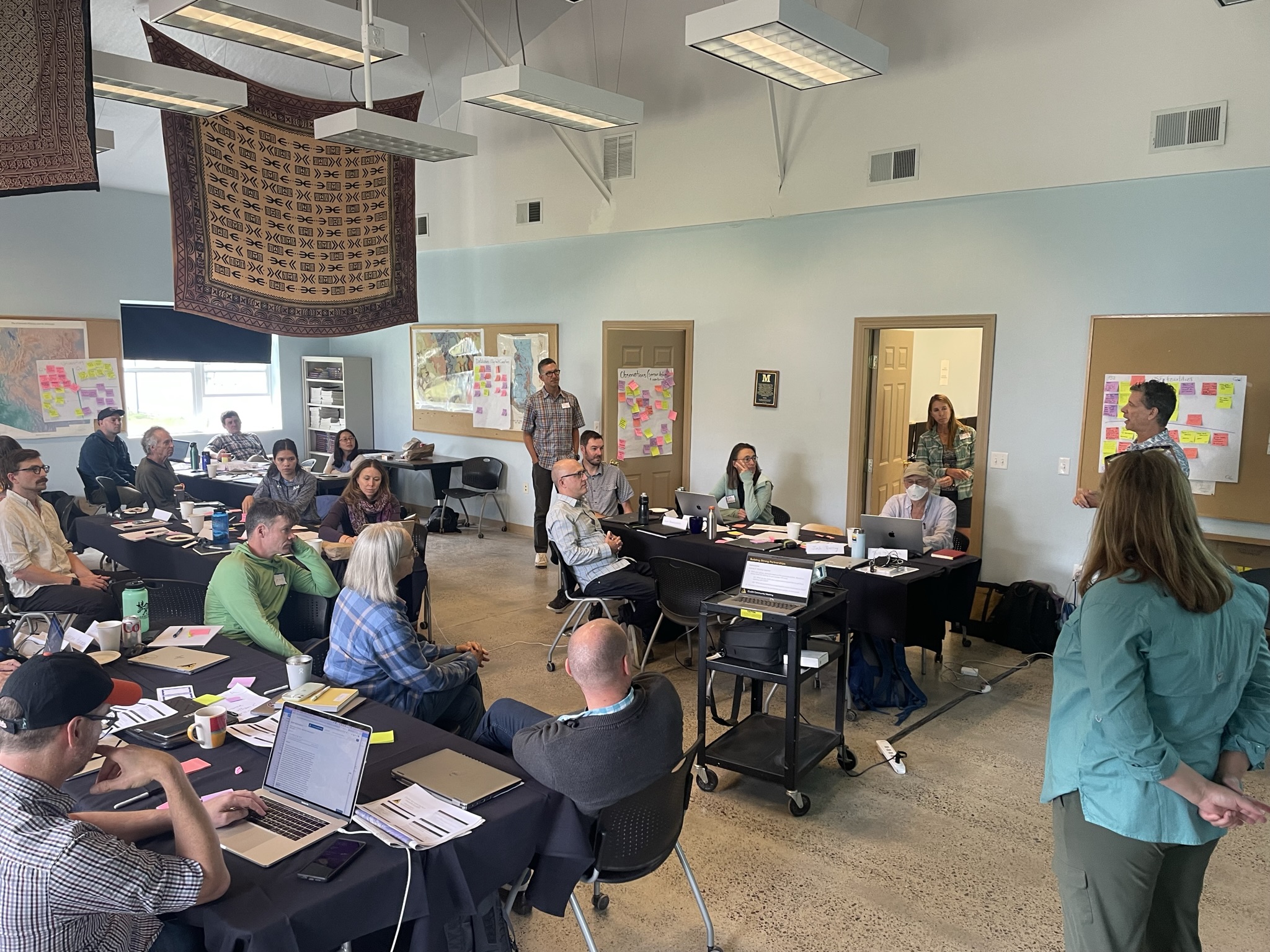
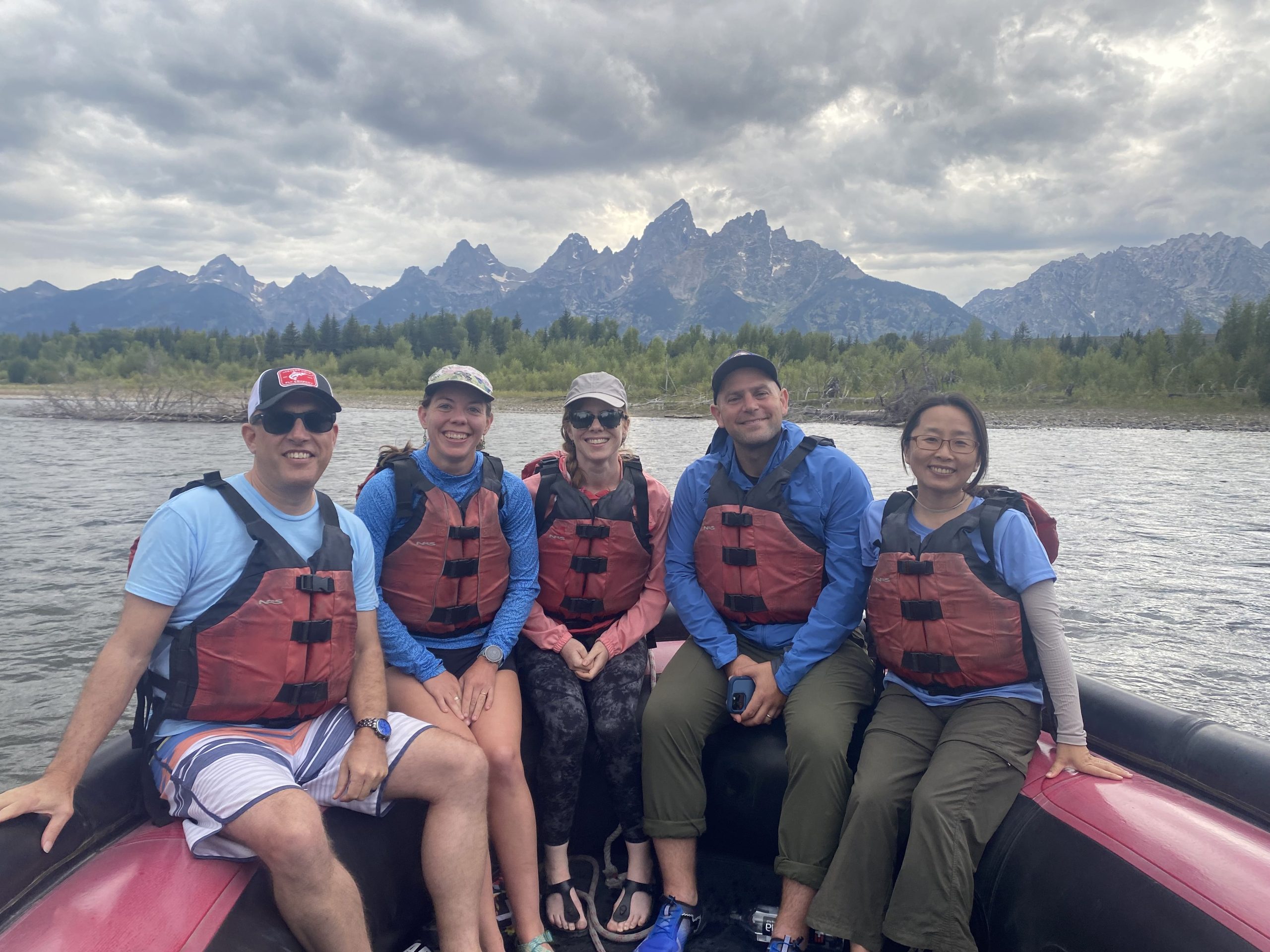
During the planning phases, CLaSH held a Community meeting at the UM Field Station, Camp Davis, Wyoming, which helped inform the center’s approach to partnership and collaboration. Hosting regular meetings and workshops are important parts of collaboration and advancing hazard science research.
Learning how to effectively translate how research relates to society can be developed with the help of experts in social science, communication, policy, and other non-science fields, Roering explained. This science-into-action expertise often comes from partners who regularly work with interdisciplinary teams and speak directly with the public.
But CLaSH partnerships go well beyond simple conversations about hazard research, said Roering—they are mutually beneficial relationships. “We want to build a community of practice that facilitates progress in how we address land surface hazards,” he explained.
For instance, in Southeastern Alaska, CLaSH partnered with Alaska Native tribal partners to facilitate research collaboration and communication with state agencies and residents about cascading hazards in mountain catchments. “These relationships have enabled us to work with residents to build landslide susceptibility maps and landslide early warning forecasts,” said Roering. “We’ve also worked with our tribal partners to apply for mitigation grants through federal programs like FEMA and the Bureau of Indian Affairs to reduce debris flow risk.”
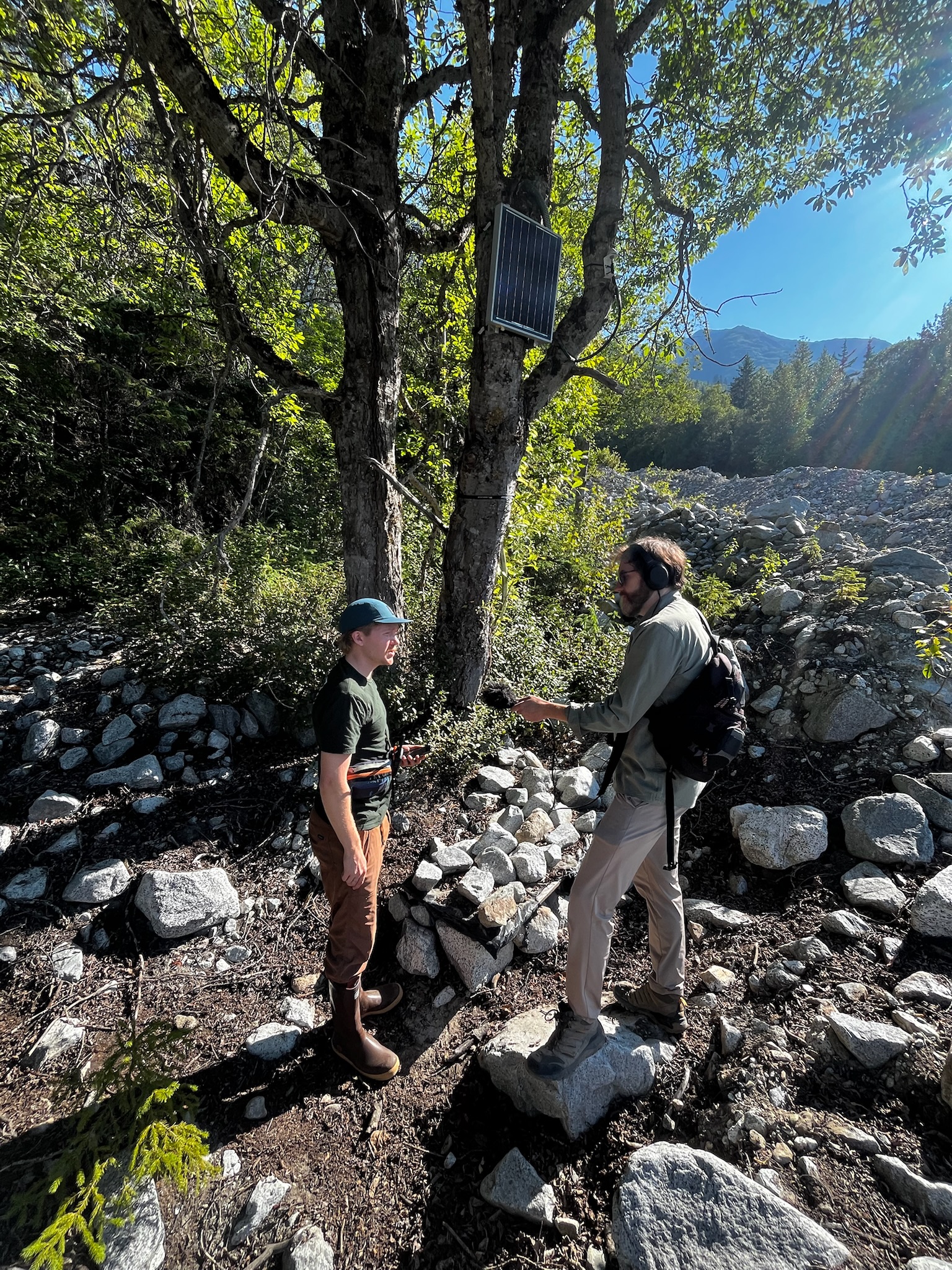
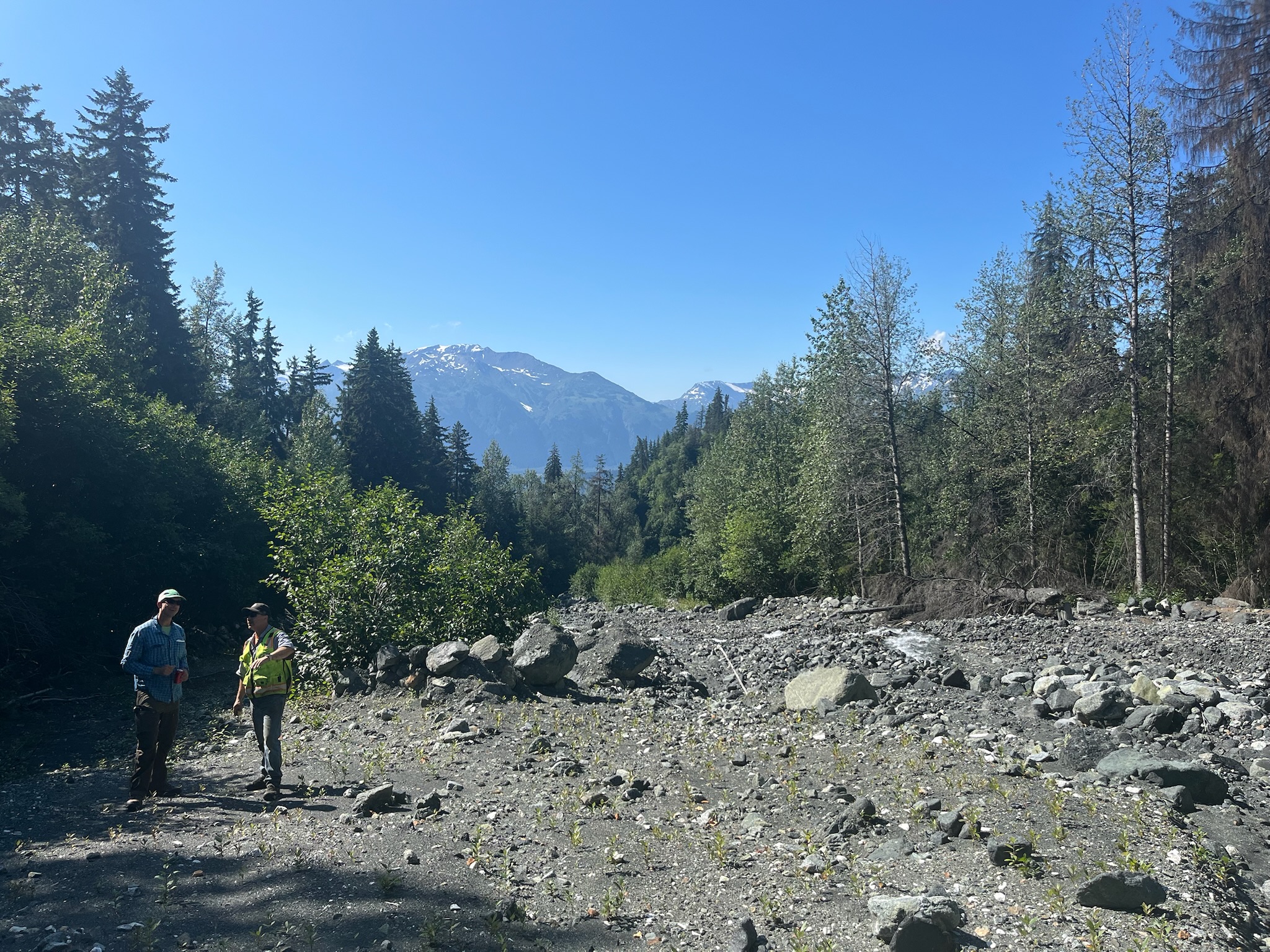
Field work in Alaska during the summer of 2026 melded data collection experience for undergraduate and graduate student researchers, with CLaSH and Tribal partners.
Partnerships can also be a key factor in advancing research forward and filling in data gaps. “The research and practice community ClaSH is creating can also be helpful to partners as a resource for information as well as a space to discuss land surface hazards,” said Nina Oakley, a geohazards climatologist with the California Geological Survey who is also a CLaSH partner.
Oakley’s work focuses on rainfall-triggered geohazards like landslides and postfire flash floods and debris flows. She collaborates regularly with geologists and engineers to incorporate weather and climate data and information into their work. But she noted that communication around predictions can be tricky.
“For postfire hazards, there are lots of misconceptions about where/when/why postfire floods and debris flows will occur,” she said. “Postfire hazards are still a developing science, so communicating the uncertainty of information we can provide can be challenging.”
Oakley and CLaSH partners recently published a research paper that outlined the uncertainty around precipitation estimates for high intensity rainfall events. “This work was helpful to give us a quantitative evaluation of the challenge and a publication to point to on the topic,” she said.
Building relationships before a crisis begins
CLaSH wants partnerships to be well-established and collaborative well before a hazard hits a community.
“From a practitioner perspective, it is most helpful to be brought in at the idea or early stages of a project so that we can help ensure it will address our needs and create output that we can make use of,” explained Oakley.
Roering agreed, and noted that partner collaborations was a central theme of the center’s one-day partners workshop that preceded the recent two-day Annual Meeting held in Boulder, Colorado. “The workshop keynote speaker was Katherine Rowden, who works for the US Army Corps, but also leads the national interagency group called Silver Jackets that coordinates response efforts,” he said. “She’s worked on many events and shared many experiences on how NOT to inform these processes and rather emphasized the need for scientists to build trust and experience over time with practitioners.”
During her keynote, Rowden explained how relationships are critical when decisions are pressing—when responders are inundated with maps and confusing data coming in fits and starts, being able to lean on networks of trusted partners is key. Roering agreed, adding that, “sending a FEMA official your latest modeling result right as a big storm approaches is not going to be effective.”
At the Annual Meeting, the importance of partnerships was also reflected in both the keynote and the participants themselves. “The themes that kept coming up [during the meeting] were the need for stronger interdisciplinary collaborations among all disciplines that touch land surface hazards as well as better communication among researchers, practitioners/users of the research, and public,” Oakley said. She added that it was great to see the partnerships with social scientists. “I think that will be beneficial in the ClaSH program,” she noted.
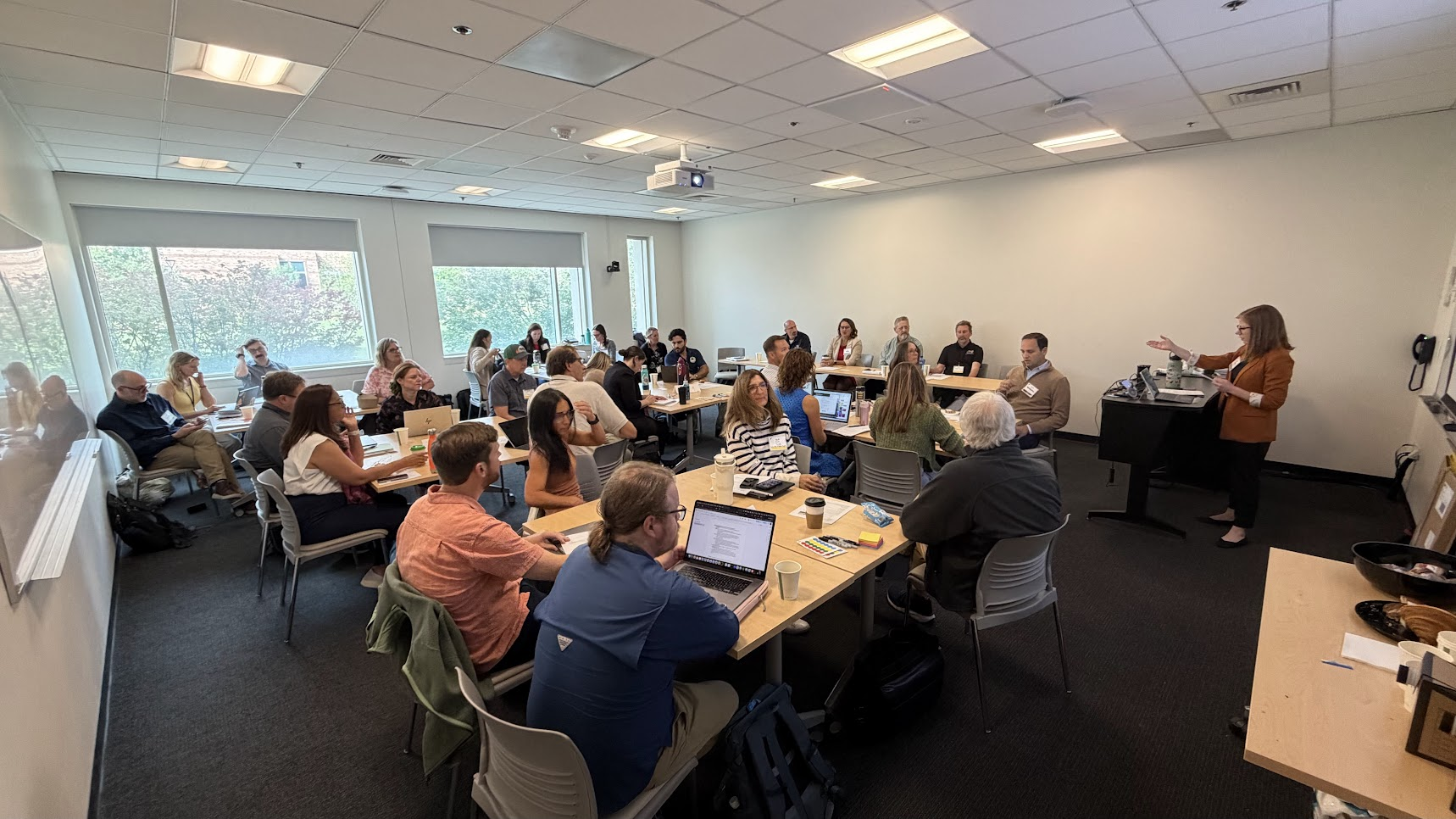
Before the 2026 inaugural Annual Meeting, CLaSH hosted a Partners workshop in Boulder, Colorado.
The future of partnerships
CLaSH partners span education, research, agencies, NGOs and private industry, and new organizations are joining all the time.
“There’s no secret handshake, certification, or test to become a partner — it’s broadly defined as any organization that has a role in the disaster cycle of cascading hazards and has interest in engaging with our work,” said Roering. “As a result, our workshop attracted an amazingly wide swath of people and organizations that we’re honored to call partners.”
He said that it is important to get partners together to share information and upcoming goals. “Workshops are often useful for simply defining roles and responsibilities in the disaster cycle (preparedness, response, recovery, and mitigation) in order to ‘map’ out how science can contribute,” Roering said.
Along the way, Roering said they often hear stories about when and how to insert ourselves as scientists into these spaces—and when to stand aside. “The playbook for translating science into these sectors/activities has not been written and we’re trying to write it together through our center’s work in this space.”